
Introduction
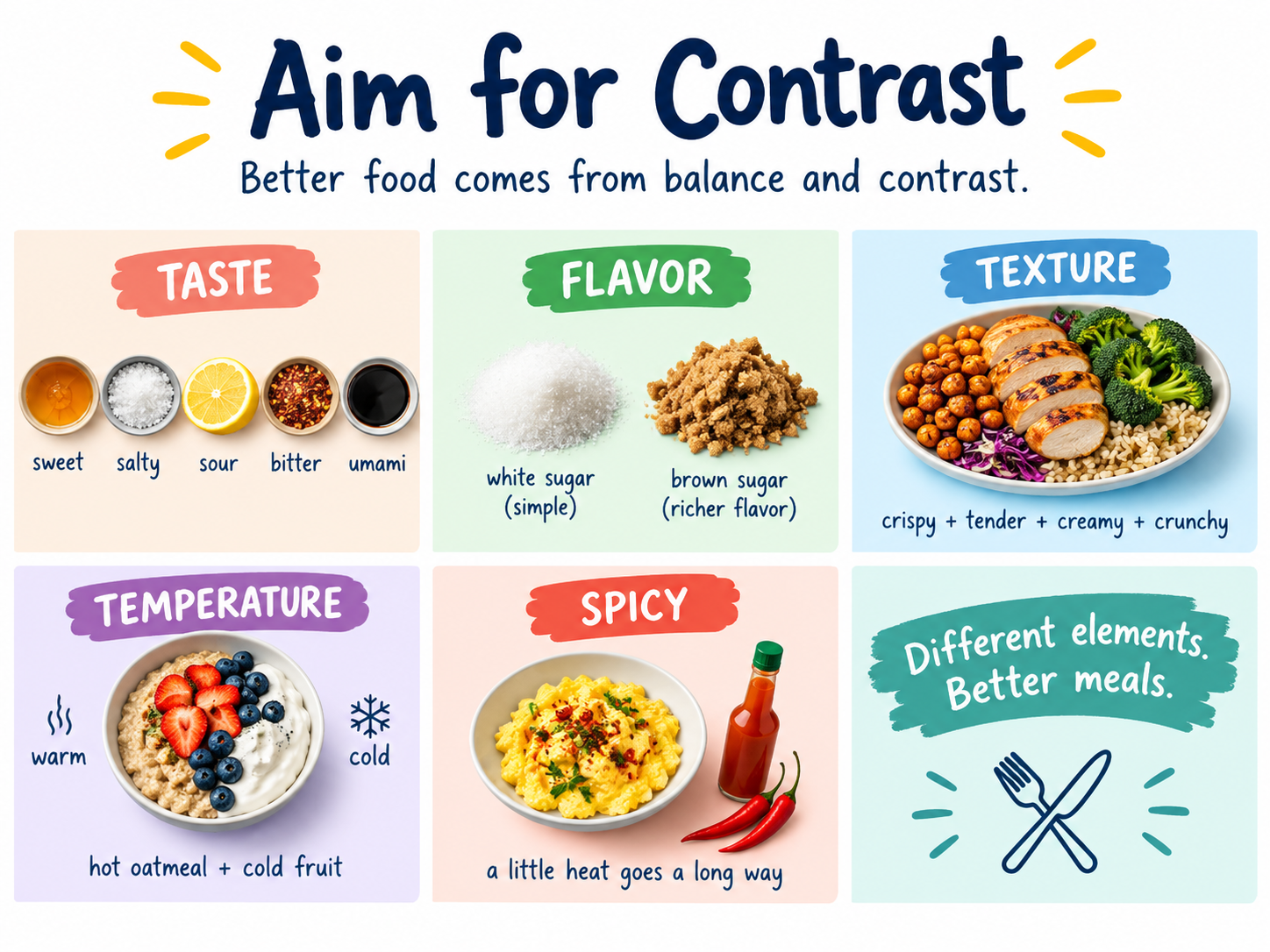
Aim for contrast in your cooking. There can be contrast in many different things: tastes, flavors, textures, temperatures, spice, and more.
Even if you think you don't like contrast, I'm willing to bet that you do. Think about a warm brownie with cold ice cream, crispy chicken with a creamy sauce, or salty fries dipped into a sweet milkshake.
Table of Contents
Taste
The main contrast element is using all five tastes: sweet, salty, sour, bitter, and umami. You don't need all five tastes in every dish, but a careful combination of different tastes can make food much more interesting.
I've previously written an article delving into the 5 main tastes, so make sure to check that out. But here's the short version. You need a careful combination of all 5 to make the best food. Don't have overly salty Chinese food, or overly sweet desserts.
Add a small pinch of flaky salt on top of your brownies to balance out their sweetness and bring out the flavors of the chocolate. Add a little drop of liquid monk fruit to your tomato sauce to balance the acidity of the tomatoes. Put a splash of something acidic (like lemon juice) onto your plate after heating up leftovers to make them feel fresh again. Your options for using all five tastes are endless.
Flavor
I know what your thinking. Aren't taste and flavor the same thing? NO.
Taste and flavor are 2 totally different things. If you eat a spoonful of white sugar, it's intensely sweet, but has very little flavor. In comparison, eat a spoonful of brown sugar. Not only is it super sweet, but the addition of molasses gives it a deeper, more complex flavor than white sugar.
Taste tells you what kind of sensation you're experiencing, while flavor describes the more specific characteristic of that food. Taste is the broad term, such as sweet. And flavor is more specific, like the distinct flavors of honey, maple syrup, fruit, or caramelized onions.
In cooking, flavor often comes from your spice cabinet. Without it, your meat, vegetables, and grains will taste bland, as many of these have little flavor on their own.
Things such as steak, sweet potatoes, or butternut squash may be good with just a little salt and pepper, as they can taste good on their own. Sometimes plain oatmeal with a small pinch of salt hits the spot.
But generally, think of seasoning as the adult version of covering up your vegetables with ketchup, just without the added sugar. If you like the taste of the food, you don't need too much. But with some things like liver or certain vegetables, go balls-to-the-wall with the spice cabinet if you need to.
Black pepper, garlic powder, onion powder, paprika, cumin, chili powder, red pepper flakes, coriander, ginger, basil, oregano, parsley, rosemary, etc. Those are just some of the many items in my spice cabinet that you can be using.
And there's more than just the spice cabinet. Vinegars, lemon juice, tomato paste, and soy sauce. Or fresh ingredients like herbs, garlic, ginger, and turmeric.
The basic template of chicken, broccoli, and brown rice can taste like many different cuisines with nearly infinite flavor options depending on what you put on it. Use paprika, cumin, and chili powder for a Mexican vibe. Or basil and oregano with tomato paste for Italian. Opt for soy sauce, ginger, and garlic for Chinese.
Texture
Often overlooked, textural contrast is a very important element in food. The most boring meal is a homogeneous one.
It's the reason why I'm not a fan of a blended soup. It's why Vic adds "crunchies" (walnuts and chocolate chips) to her yogurt. The reason why people like croutons or nuts on a salad. Or browned, crispy rice on the bottom of Tahdig (Persian Scorched Rice) with a soft, steamed top.
Every ingredient doesn't need to taste the same, and they certainly shouldn't all feel the same. Iceberg lettuce doesn't contribute any flavor to a burger or sandwich, but it provides a much needed crunch. It's the same reason why people add chips to a sandwich.
My go-to lunch or dinner is some kind of cooked protein, vegetables, and carb source on top of raw cabbage. Not only does the cabbage provide bulk, fiber, and vitamin C, but it also adds crunchy texture, making the bowl more varied in texture and interesting to eat.
An example meal might be grilled chicken, roasted broccoli, roasted sweet potatoes, and crumbled goat cheese over cabbage. The chicken is tender, the broccoli is lightly charred, the sweet potatoes are soft, and the goat cheese is creamy, all on top of crunchy cabbage, topped with red wine vinegar and mustard.
Let's apply this to breakfast now. A bowl of yogurt or cottage cheese with chopped nuts and diced fruit. Creamy avocado on top of a crispy piece of toast with a juicy tomato. A fried egg with browned whites and a jammy and runny yolk.
This even works for desserts. Think of the crunch of nuts in a brownie or banana bread. The buttery and sugary crisp of a cookie combined with the soft pockets of chocolate. The addition of mix-ins to ice cream. The pop of a blueberry or the crunchy sugar crystals on a muffin. The creamy filling of a cheesecake versus the solid and buttery crust. A crispy streusel top to a filling of soft apples in a pie.
Textural contrast is one of the most important aspects into making an appealing breakfast, lunch, snack, or dessert. Smoothies are boring, but smoothie bowls? That's where it's at.
Temperature
Hot oatmeal with chilled fruit. Warm grilled vegetables over a salad. A cheeseburger with crisp pickles. A warm apple pie or lava cake with vanilla ice cream.
What do these items have in common? Temperature contrast. They all feature some sort of warm and cold element mixed together. While not as important as the other contrasting elements, temperature variation can play a big role in a dish by adding variety.
Spice
A meal can often feel a bit flat without any sort of spice element. I'm not saying your dinner should blow your ears off and put you in a sweat. But there should be the slightest element of heat.
Adding a dash of hot sauce to scrambled eggs not only adds some heat, but it also contributes sourness and saltiness. A couple dashes of chili flakes in a tomato sauce can go a long way.
There's a reason why people are a fan of chili chocolate. The sweetness of the chocolate is balanced by a slight bit of heat, creating a more complex flavor experience.
Even the white people spicy spice (aka black pepper) can provide the smallest hit of spice that functions in the background, rounding out the other elements.
Conclusion
Taste, flavor, texture, temperature, and spice. These five elements can make a big difference in any meal you make. Learning to utilize all five is what can elevate something from "meh" to delicious.
This post may contain affiliate links