
Introduction
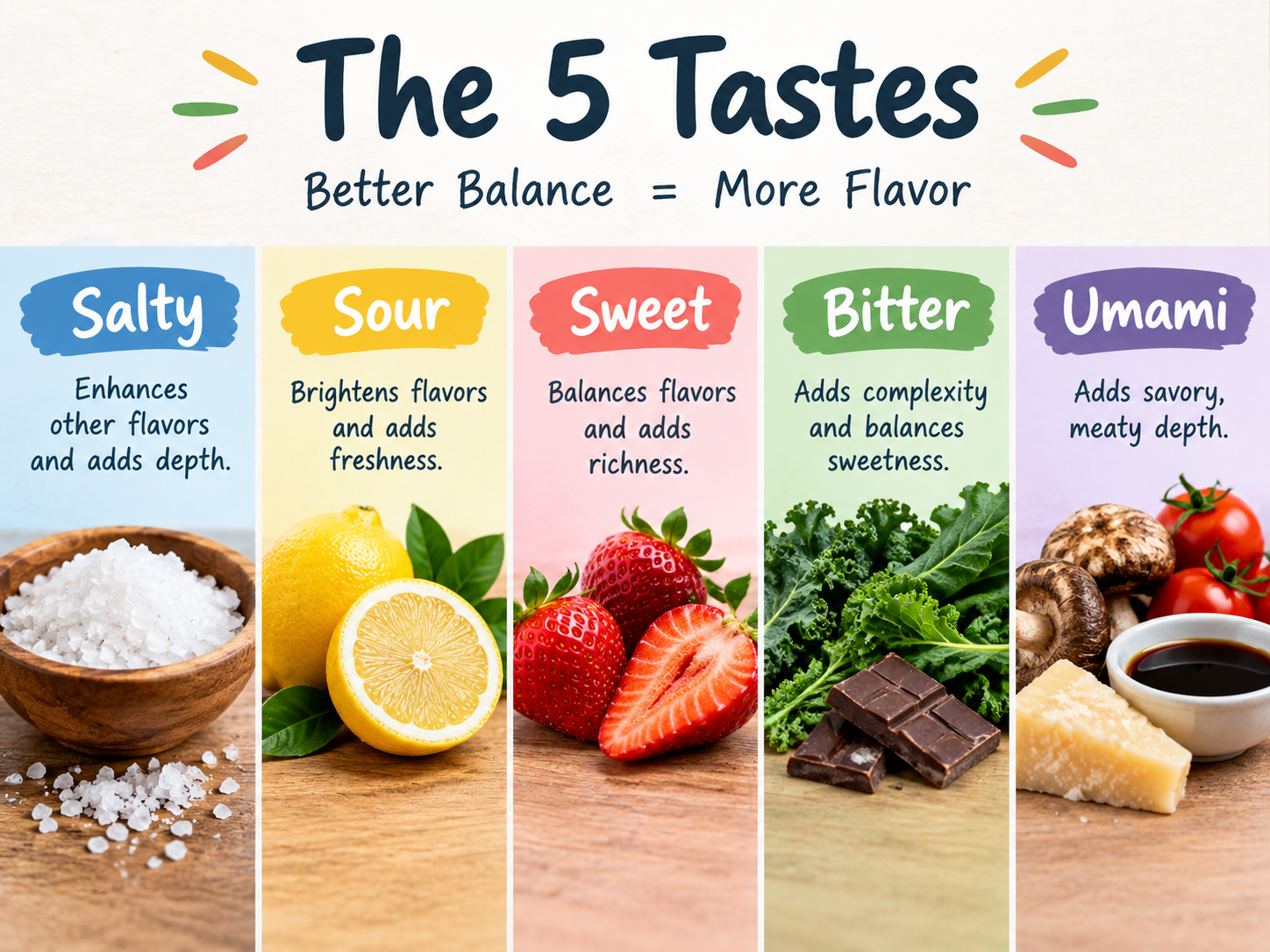
One of the best ways to elevate your cooking is by considering all five tastes. These are salty, sour, sweet, bitter, and umami. One of the best ways to elevate your cooking is to understand the five basic tastes and how they interact with each other.
Table of Contents
Salt
You'll often hear that salt doesn't make things salty. That's not quite literally true. Too much salt absolutely will. But in smaller amounts, salt can enhance the perception of other flavors without making a dish taste noticeably salty.
Make sure to thoroughly salt your boiling water for rice and pasta to properly season them; otherwise they'll end up bland and tasteless. Put a pinch of salt in your oatmeal. Salt really belongs in almost everything.
Add a pinch of flaky salt to your sweet treats. There's a reason why most nicer dessertshave flaky salts on top, instead of just blended in. Not only does the salt pop more, but the contrast provides a slight crunch against something soft.
Especially with chocolate, a little salt can go a long way. Chocolate and sea salt is a popular option for many reasons. A little bit of salt can calm the bitterness of the chocolate while bringing out it's sweetness.
Think about caramel too. It's basically entirely sugar and cream. But a little bit of salt takes it from fine to amazing. I even like to put a small pinch of salt on fruit sometimes to balance its sweetness as well.
Sour
The other main taste to focus on is sour. You should almost always have some sort of sour element to your meals. This can be lemon juice, lime juice, red wine vinegar, balsamic vinegar, apple cider vinegar, mustard, pickles, etc.
Acid brightens up other flavors in a dish, especially after long cooking time. This is why you might add a splash of lemon juice at the end of cooking or right onto your plate, especially with a long cooked dish like a chili or soup.
Sweet
Don't overlook sweet though, especially if you eat a sugar free diet like me. There are plenty of sweet elements that aren't straight sugar. Some vegetables including onions, bell peppers, tomatoes, sweet potatoes, plantains, butternut squash, and acorn squash, are quite sweet when cooked.
But your main sweetness element will be fruit. Dice up any fruit onto your salads, like apples, pears, mangos, berries, or kiwi. Sauté some pineapple with your veggies for not only a Southeast Asian vibe and delicious flavor, but also to make the dish sweeter.
Finally, you can "cheat" a little bit by adding sweetness in the form of liquid monk fruit or pure granulated monk fruit. Just remember that a meal should be a meal, not a dessert. Stay away from things like white or brown sugar, and use honey and maple syrup very sparingly.
Bitter
Bitter is a lot harder to nail down. On the surface, bitter seems like the total opposite of sweet, and something that you'd never want to eat.
After all, bitterness can be a warning signal: many toxic compounds taste bitter. But we eat and enjoy bitter foods all the time, usually balanced by other tastes.
Coffee is extremely bitter, but most people add milk or sugar. Cocoa powder and unsweetened dark chocolate are also extremely bitter, but this is normally balanced with sweetness and sometimes saltiness.
Here's the main example I often hear. Add a teaspoon of instant espresso powder to your brownies. It won't make the brownies taste like coffee. Instead, the espresso will deepen the chocolate flavor, leading to a richer brownie.
Many vegetables are often described as bitter, like broccoli, bok choy, kale, and spinach. Their bitterness can be balanced with salt, acid, sweetness, spices, or other ingredients.
Umami
Finally, we have umami, something us Americans don't tend to generally understand. Umami is a Japanese word that has no direct English translation, but roughly translates to savory or meaty.
Umami is generally provided by the amino acid glutamate. The main umami-rich foods are meat, like beef, chicken, turkey, and pork, as well as fish and seafood, like salmon, tilapia, shrimp, and clams.
But umami is also abundant in cheese, mushrooms, soy sauce, marmite, and even tomatoes. The concentrated form of umami is known as MSG, or monosodium glutamate.
Grate on some parmesan cheese, sauté some mushrooms, and season with soy sauce. Okay, maybe not soy sauce and parmesan cheese together, but hey you never know until you try it. I don't judge.
The biggest challenge is to make vegan dishes while still having an element of umami. This is why mushrooms are often used as a meat substitute, because they provide a savory, meaty quality and plenty of umami, while also adding some protein and texture.
If you're vegetarian or vegan, soy sauce needs to become your new best friend. Not only is it full of umami, but it's salty too.
You need salt anyway, so sometimes you can get both saltiness and umami by using soy sauce instead of plain salt. Same idea behind adding fruit for sweetness or adding yogurt for sourness instead of just adding sugar or vinegar.
And don't be afraid to use MSG in your cooking. It's a great way to add umami without adding salt, and it can be used in both meat and vegan dishes. Just remember that a little goes a long way.
Conclusion
The 5 main taste elements. Salty, sour, sweet, bitter, and umami. Even if you don't know what they are or how to use them, we all appreciate a good combination of the five. They're integral to any savory meal and sometimes sweet treat that you should always be considering in the kitchen.
Technically, these are the five basic tastes, not the five components of flavor. Flavor also comes from other things, like smell, texture, temperature, and sensations like the heat of a jalapeño. But these five tastes are a great framework for thinking about how to balance a dish.
If you'd like to continue further, I'd suggest reading my next article, Aim For Contrast, which delves further into these additional cooking elements, besides the basic five tastes.
This post may contain affiliate links