
Introduction
At least 90% of Americans don't get enough fiber. So that likely means that you, yes you, the one reading this, needs more fiber.
Table of Contents
High Fiber Foods
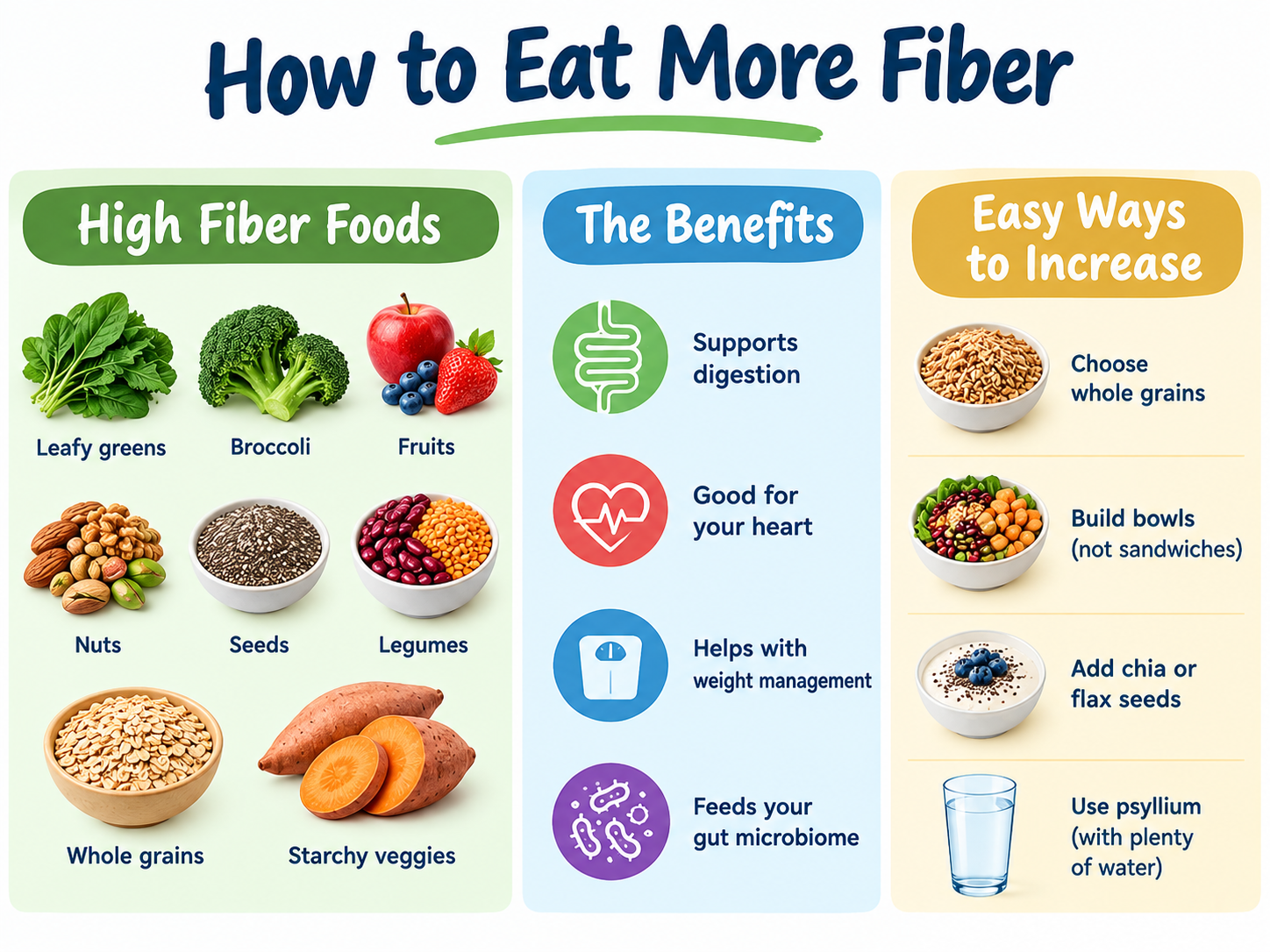
So eat more fiber. There's tons of ways to eat more fiber, so here's some foods to aim for. Basically just eat lots of plant-based whole foods, and you'll have a much easier time covering your fiber bases.
- Leafy vegetables like arugula, kale, lettuce, and spinach.
- Cruciferous veggies like broccoli, cabbage, and cauliflower.
- Root vegetables like beets, carrots, and radishes.
- Starchy vegetables like potatoes, and sweet potatoes.
- Squashes like acorn, butternut, kabocha, or spaghetti.
- Fruits like apples, blueberries, kiwis, and strawberries.
- Nuts like almonds, peanuts, pistachios, and walnuts.
- Seeds like chia seeds, flaxseeds, and sunflower seeds.
- Legumes like black, kidney, and pinto beans, along with red or brown lentils.
- Whole grains like oats, barley, and quinoa.
- Fiber supplements like psyllium husk or inulin.
Fiber can be broadly divided into 2 types: soluble and insoluble fiber. Both are important, and most high-fiber foods contain a mixture of the two. For a more in-depth fiber analysis, check out my other article Fiber: Happiness is a Good Poop.
Ways to Eat More Fiber
Swap out white pasta, white rice, and white bread for higher fiber carbohydrate sources like brown rice, quinoa, oats, beans, potatoes, or sweet potatoes.
Replace sandwiches with bowls, using leafy vegetables as a base instead of white bread. Add some carbs on top, such as brown rice, beans, sweet potatoes, or fruit, instead of using bread as the base for a sandwich or white rice as the base of a bowl.
Add chia seeds or ground flax seeds to your Greek yogurt or overnight oats. Let chia seeds hydrate for a while before eating them. The seeds form a gel as they absorb water, which can improve the texture and may make them easier to tolerate.
If you really need to increase fiber intake, then psyllium husk may be the answer you're searching for. Stir some into your Greek yogurt or oatmeal and let it sit for about 10 minutes to become super thick. Make a High Fiber Psyllium Wrap or Chocolate Milk.
Always take psyllium with plenty of liquid, whether that be mixed together with the psyllium husk or as a glass on the side. Dry-pounding psyllium is a great way to turn a joke into an emergency room visit.
About Increasing Your Fiber Intake
Increase your fiber intake slowly. I may consume close to 100 g of fiber a day, over 5 times the amount of the average American. But you'll either be in bed or on the toilet all day if you tried to jump into that out of nowhere.
So what's the problem here, just eat more fiber, it ain't that difficult. Oh yeah, the bloating and the gas, that's right. When increasing fiber intake, it's best to do it slowly. Drastically increasing fiber intake leads to digestive discomfort, such as bloating and gas.
Not only is this uncomfortable, but it has the worst possible effect: stopping people from eating fiber. They may "feel better" with little to no fiber, because they ate the fiber in the wrong way.
When this protein trend dies, I guarantee fiber will be next. And with that, people will overeat high fiber junk food, wrongly conclude that they can't eat fiber, and the fiber trend will die as a dumb fad diet that did nothing.
Conclusion
The goal isn't to suddenly cram 50 grams of fiber into your diet overnight. Start small, eat a variety of plant-based whole foods, and gradually work your way up. Your gut needs some time to adjust, and a little patience can save you from a whole lot of bloating and gas.
Fiber doesn't need to be complicated. Eat more fruits, vegetables, legumes, nuts, seeds, and whole grains, and you'll be well on your way to getting more fiber without having to think about it too much.
But should you be farting? Well, let's find out, in part 2, The Farticle, where I talk about why we fart, what that means and if it's healthy for you or not.
This post may contain affiliate links