Introduction
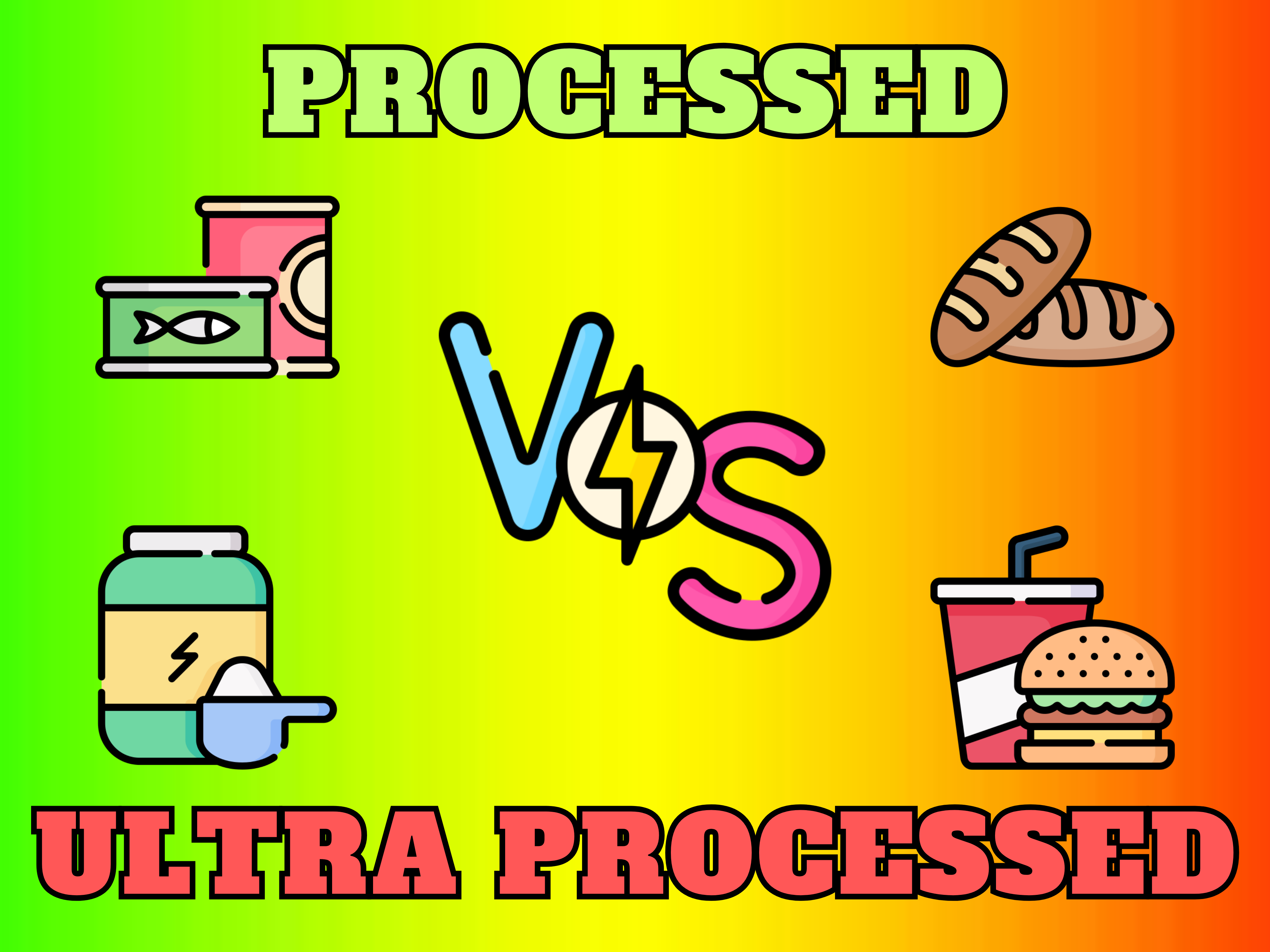
Lately, there's been a lot of buzz around the terms "processed" and "ultra processed" foods. What do these mean? What are some examples of them? Do we need to avoid them all, or are some of these foods good for us?

What is a Processed Food?
Let's start by defining a processed food. A processed food is any food that had undergone any process. Simple enough; you may be saying "well, no duh".

If you want to pedantic, everything is a process. Shipping to the store, packaging, cutting, canning, etc. All of these are processes. A processed food is typically defined as something you can make in your own kitchen. These foods typically undergo minimal processing (duh), and have a fairly short list of ingredients.

What is an Ultra Processed Food?
On the other hand, an ultra processed food is something that can't be created at home. Instead, these need to be created in a lab or factory, and often contain a paragraph of ingredients.

Ultra processed foods typically include ingredients like refine sugar, starch, and oil, as well as added preservatives, natural and artificial flavorings, and food dyes. Ultra processed foods are devoid of fiber, protein, vitamins, minerals, anti-oxidants, phytochemicals, and water that are found in real, whole, minimally processed foods.

Essentially, if you don't recognize an ingredient and you have to google it, or it reads like a chemical compound, you're probably looking at an ultra processed food. If it doesn't read like food, then it probably isn't. To quote Dr. Mark Hyman: "There's no such thing as junk food. Only junk and food."

So What?
The smart asses out there may point to things like dihydrogen monoxide or sodium chloride as being chemicals, which are obviously just water and salt. Yes, everything is a chemical, but it's time to stop gaslighting people when they say to avoid chemicals in your food and water supply.

Of course, there are some exceptions. Things like acetic acid, riboflavin, ascorbic acid, carotenoids, and pyridoxine may all sounds scary. But in reality, these are all just different terms for vinegar, vitamin B2, vitamin C, vitamin A, and vitamin B6. Just because you don't know what something is doesn't necessarily make it harmful, but err on the side of caution.

Examples
With that being said, below are examples of both healthy and unhealthy processed foods, and well as both healthy and unhealthy ultra processed foods. And of course, it goes without saying that not everything is a black-and-white "healthy" or "unhealthy", these things lay on a spectrum, just like your overall wellness.

Healthy Processed Foods


Unhealthy Processed Foods


Healthy Ultra Processed Foods

Unhealthy Ultra Processed Foods
Conclusion
In general, if you see any food with a health claim on on it, you should be skeptical. Real, whole foods don't need to prove they are healthy. Ignore any claims of low fat, low cholesterol, low sugar, high in [insert vitamin/mineral here], American Heart Association (AHA) heart healthy, or any claim at all of being good for you.

Instead, flip over the packaging, and read the ingredients list and nutrition facts. Look out for things like added sugar and oils, high sodium, added flavorings and colors, and long lists of "foods" that you don't recognize. Remember that not all processed and ultra processed foods are necessarily good or bad for you. But in general, the less processing and ingredients, the better. Happy shopping!
Lately, there's been a lot of buzz around the terms "processed" and "ultra processed" foods. What do these mean? What are some examples of them? Do we need to avoid them all, or are some of these foods good for us?
What is a Processed Food?
Let's start by defining a processed food. A processed food is any food that had undergone any process. Simple enough; you may be saying "well, no duh".
If you want to pedantic, everything is a process. Shipping to the store, packaging, cutting, canning, etc. All of these are processes. A processed food is typically defined as something you can make in your own kitchen. These foods typically undergo minimal processing (duh), and have a fairly short list of ingredients.
What is an Ultra Processed Food?
On the other hand, an ultra processed food is something that can't be created at home. Instead, these need to be created in a lab or factory, and often contain a paragraph of ingredients.
Ultra processed foods typically include ingredients like refine sugar, starch, and oil, as well as added preservatives, natural and artificial flavorings, and food dyes. Ultra processed foods are devoid of fiber, protein, vitamins, minerals, anti-oxidants, phytochemicals, and water that are found in real, whole, minimally processed foods.
Essentially, if you don't recognize an ingredient and you have to google it, or it reads like a chemical compound, you're probably looking at an ultra processed food. If it doesn't read like food, then it probably isn't. To quote Dr. Mark Hyman: "There's no such thing as junk food. Only junk and food."
So What?
The smart asses out there may point to things like dihydrogen monoxide or sodium chloride as being chemicals, which are obviously just water and salt. Yes, everything is a chemical, but it's time to stop gaslighting people when they say to avoid chemicals in your food and water supply.
Of course, there are some exceptions. Things like acetic acid, riboflavin, ascorbic acid, carotenoids, and pyridoxine may all sounds scary. But in reality, these are all just different terms for vinegar, vitamin B2, vitamin C, vitamin A, and vitamin B6. Just because you don't know what something is doesn't necessarily make it harmful, but err on the side of caution.
Examples
With that being said, below are examples of both healthy and unhealthy processed foods, and well as both healthy and unhealthy ultra processed foods. And of course, it goes without saying that not everything is a black-and-white "healthy" or "unhealthy", these things lay on a spectrum, just like your overall wellness.
Healthy Processed Foods
- Frozen fruits and vegetables
- Canned beans
- Unsweetened tomato sauce
- Unsweetened applesauce
- Precut fruits and vegetables
- Salsa
- Guacamole
- Pesto and hummus made with EVOO
- Pre-grated cheese
- Herbs, spices, and salt
- Unsalted or lightly salted, dry roasted nuts and seeds
- Plain and unsweetened yogurt, cottage cheese, and milk
- Pre-shredded or packaged cheeses
- Oils like extra virgin olive oil, unrefined coconut oil, avocado oil, almond oil, or sesame oil
- Balsamic vinegar
- Soy sauce, low sodium, gluten free
- Unsweetened coconut flakes
- Plain rolled oats
- Ground flaxseed
- Natural peanut butter (just peanuts and salt)
- Unsweetened jams and jellies
- Flours like almond, oat, chickpea, and millet
- 100% chocolate
- Cocoa powder
- Liquid egg whites
- Natural sweeteners, like maple syrup and honey (in moderation)
- Minced garlic
- Unsweetened pickles
- Sauerkraut and kimchi
- Unsweetened drinks, like tea, kombucha, and coffee
- Brown rice, quinoa, beans, and lentils
- Chickpea pasta and red lentil pasta
- Canned pumpkin puree
- Ground meat, like beef, turkey, or chicken
- Whole cuts of meat, like chicken, turkey, or beef
- Unsweetened dried fruit, like dates, figs, and raisins
- Canned tomatoes (paste, diced, crushed)
- Tofu and tempeh
- Chia seeds
- Canned fish in water, like salmon, tuna, sardines, and mackerel
- Canned chicken breast (low sodium)
- Bakery whole wheat bread
Unhealthy Processed Foods
- Sweetened tomato sauce
- Pesto and hummus made with seed oils
- Sweetened applesauce
- Flavored nuts, like honey roasted, BBQ, or chocolate
- Conventional peanut butter (with added sugar and hydrogenated oil)
- Bakery white bread
- Sweetened jams and jellies
- Flavored instant oatmeal packets
- "Dark" chocolate (anything under 70 %)
- Canned baked beans and refried beans
- Flavored yogurt, cottage cheese, and milk
- Sweetened coconut flakes
- Flavored balsamic vinegars and glazes
- High sodium or sugar spice mixes and sauces
- Bakery dessert, pastries, and muffins
- Agave syrup, brown rice syrup, or molasses
- Sweetened pickles
- Sweetened drinks like tea, kombucha, and coffee
- Fruit juices (even unsweetened)
- Refined coconut oil
- Cream cheese, butter, and mayo
- White rice
- Processed meats, like bacon and Italian sausage
- Deli meats and salami
- Sweetened canned fruit, like pineapple or cherries
- Canned pie fillings, like pumpkin, apple, cherry, or blueberry
- Candied nuts, like pecans, almonds, and walnuts
- Croutons
- Sweetened dried fruit, like cranberries, mango, papaya, and blueberries
- Plantain chips and banana chips
- Granola
- Trail mixes
- Canned fish in oil, like salmon, tuna, sardines, and mackerel
Healthy Ultra Processed Foods
- Some protein bars (if containing no added sugar and at least 10 g of protein per 100 calories)
- Protein powder (ideally unflavored)
- Peanut flour (PB2 or PB Fit)
- Defatted coconut flour
- Flours, like whole wheat, spelt, and rye
- Zero calorie sugar substitutes like stevia, monk fruit, erythritol, or allulose
- Sugar free syrup (in moderation)
- Plain rice cakes
- Whole wheat pasta
- Unsweetened plant based milks, like almond milk, soy milk, or oat milk
Unhealthy Ultra Processed Foods
- Granulated, brown, or powdered sugar
- Organic cane sugar or coconut sugar
- Date sugar or date syrup
- Artificial sweeteners, like sucralose, aspartame, or saccharin
- White flour
- Refined seed oils, like canola, vegetable, corn, or sunflower
- Packaged snacks, like cookies, crackers (even "whole-grain"), chips, and pretzels
- All cereals, such as Cheerios (Original and Honey Nut), Lucky Charms, Raisin Bran, Rice Crispies, and Froot Loops
- Frozen waffles and pancakes
- Frozen breakfasts like egg sandwiches and breakfast sausages
- Frozen and prepackaged meals
- Frozen snacks, like chicken nuggets, fries, mozzarella sticks, and fried pickles
- Desserts, like ice cream, cakes, brownies, and cookies
- "Breakfast" foods, like cinnamon rolls, muffins, donuts, and pastries
- Candy bars and gummies
- Dark chocolate candies and truffles
- "Protein" bars with added sugar, low protein contents, and refined oils
- Sugar sweetened beverages, like soda, juice, iced tea, lemonade, and sports drinks
- Diet drinks like soda, juice, electrolyte drinks, or energy drinks with artificial sweeteners
- Energy drinks, like Red Bull or Monster
- Flavored rice cakes
- White pasta
- Shelf stable breads, bagels, and tortillas (both white and whole wheat)
- Instant mashed potatoes
- Dessert toppings like chocolate or caramel sauce, sprinkles, or chocolate chips
- Whipped cream and whipped topping
- Sweetened plant milks
- Instant noodles
- Boxed mac and cheese
- Fast food
- Salad dressing bottles and miracle whip
- Granola bars
- Processed meat products, like hot dogs, bologna, spam, and pepperoni
Conclusion
In general, if you see any food with a health claim on on it, you should be skeptical. Real, whole foods don't need to prove they are healthy. Ignore any claims of low fat, low cholesterol, low sugar, high in [insert vitamin/mineral here], American Heart Association (AHA) heart healthy, or any claim at all of being good for you.
Instead, flip over the packaging, and read the ingredients list and nutrition facts. Look out for things like added sugar and oils, high sodium, added flavorings and colors, and long lists of "foods" that you don't recognize. Remember that not all processed and ultra processed foods are necessarily good or bad for you. But in general, the less processing and ingredients, the better. Happy shopping!
This post may contain affiliate links