Introduction
Alright, it's time to address the elephant in the room. Farting.
Welcome to The Farticle.
If you're wondering why I'm talking about farting all of a sudden, it's because I was just discussing increasing your fiber intake. Make sure to check out Part 1, How to Increase Your Fiber Intake.
With an increase in dietary fiber, there will likely be some... consequences. The slower you ramp up your fiber intake, the less you may experience them, but some mild gas is completely normal.
You will be a bit gassy. There's no sugarcoating it. You'll have some noise, some stench, and you may occasionally clear a room.
So this begs the question: is farting actually good for you?
Table of Contents
- Introduction
- Why Do We Fart?
- Why Do Some Foods Make Us Fart?
- Why Do Some People Fart More?
- Why Do Some Farts Smell Worse?
- Why Does Fiber Make You Gassy?
- What Are Bad Farts?
- Conclusion
Why Do We Fart
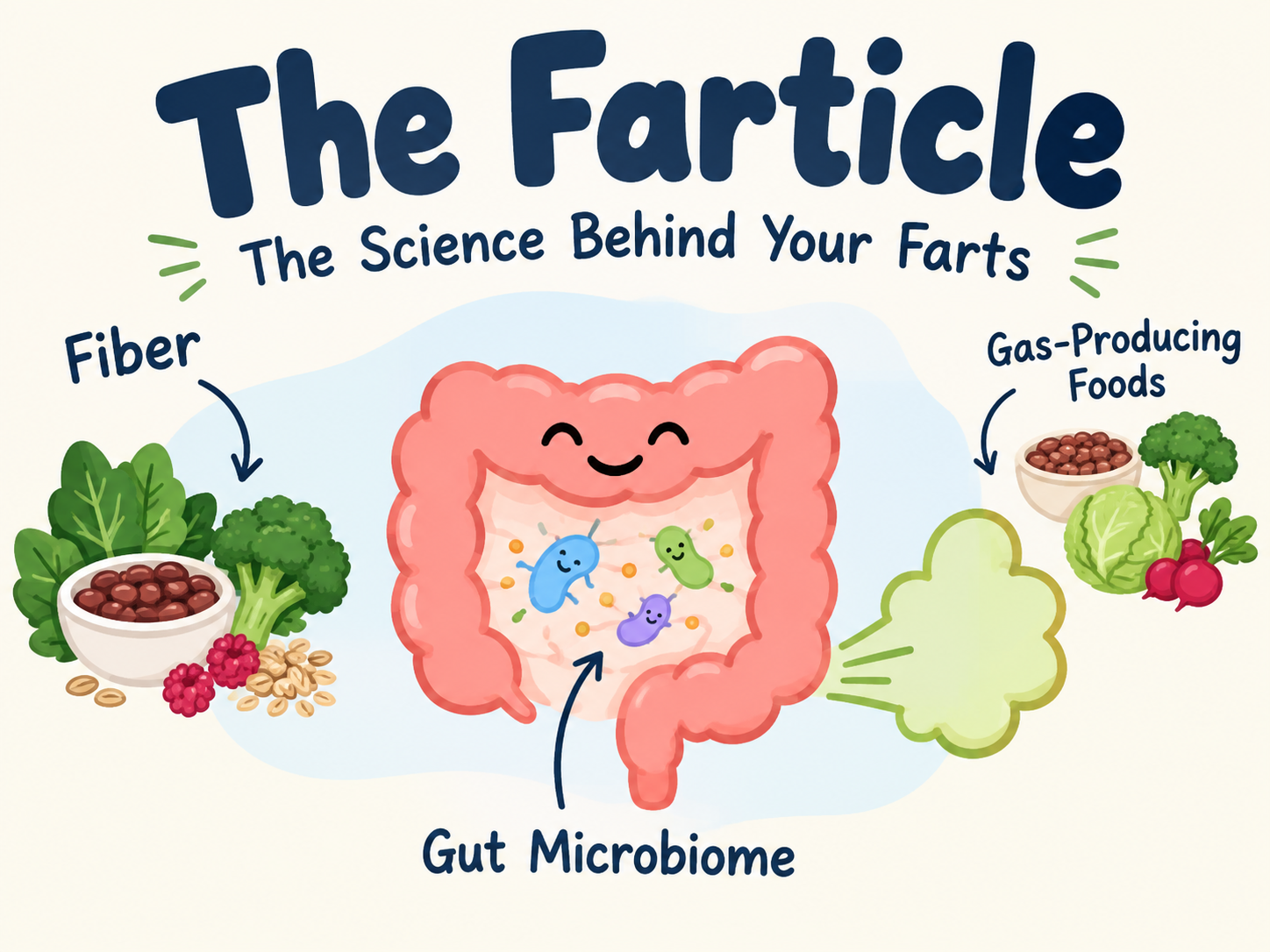
Some foods are known for being gassier than others. Beans in particular are the main offenders, but there are some other common gassy foods like broccoli, cabbage, radishes, and raisins.
Many of these foods contain significant amounts of FODMAPs, although the amount can vary considerably depending on the food and serving size. If you can tolerate beans without digestive discomfort, there's no reason not to eat them regularly. You shouldn't fear a little gas.
FODMAP stands for fermentable oligosaccharides, disaccharides, monosaccharides, and polyols. These are short-chain carbohydrates that are poorly absorbed in the small intestine and can be rapidly fermented by gut bacteria. This can draw water into the intestine and produce gas, which can cause bloating and other digestive symptoms in some people.
Importantly, FODMAPs aren't inherently unhealthy. Many FODMAP-rich foods are extremely nutritious, including beans, certain fruits, vegetables, and whole grains. If you tolerate them, there's generally no reason to avoid them just because they're high in FODMAPs.
A lot of farting is basically the result of your gut microbiome fermenting some of the food you ate. You may produce less gas on a very low-fiber diet because there's less fermentable carbohydrate available for your gut microbes. But that doesn't mean less gas is healthier. A diet can be low in fiber and still cause plenty of digestive problems.
Why Do Some Foods Make Us Fart?
Why do some foods make you fart more than others? The simple answer is that some foods contain more carbohydrates that make it to your colon undigested. Your gut bacteria then ferment these carbohydrates, producing gas as a byproduct.
Beans are a particularly good example. They contain carbohydrates such as raffinose and stachyose that humans don't digest very well. These carbohydrates make their way to the colon, where your gut bacteria happily ferment them. The result? More gas for you.
Intestinal gas can come from other sources besides gut microbiome fermentation, though. For example, swallowed air can eventually come back out as a burp or travel through the digestive tract and come out as a fart.
Intestinal gas is typically made up of gases such as nitrogen, oxygen, carbon dioxide, hydrogen, and methane. Most of a fart is actually made up of relatively odorless gases. The infamous smell comes from tiny amounts of compounds produced by gut bacteria, including sulfur-containing compounds.
Beans and cabbage give me a little bit of gas, but a perfectly manageable amount. It's not overly frequent or strong-smelling, and I don't experience any digestive pain or discomfort. This is totally fine, and I still eat these foods regularly.
Why Do Some People Fart More?
So why can one person eat a giant bowl of beans and barely fart while another person sounds like a trombone section? A big part of it comes down to individual differences in digestion and gut bacteria.
Everyone has a somewhat different gut microbiome, and different bacteria ferment different carbohydrates in different ways. Your diet, eating habits, digestion, and even how much air you swallow can all affect how much gas you produce.
In other words, your friend being able to eat a mountain of beans without clearing the room doesn't mean there's anything wrong with you if beans make you a little gassy.
Why Do Some Farts Smell Worse?
And what about the smell? Why can one fart be virtually odorless while another could qualify as a chemical weapon?
Interestingly, the gases that make up most of a fart aren't responsible for the smell. Nitrogen, oxygen, carbon dioxide, hydrogen, and methane are generally odorless. The smell comes from tiny amounts of other compounds produced by gut bacteria, including sulfur-containing compounds.
This means that more gas doesn't necessarily mean smellier gas. You can have a loud, enormous fart that barely smells, or a silent-but-deadly one that makes everyone question their life choices.
Why Does Fiber Make You Gassy?
Your digestive system and gut microbiome can adapt to changes in what you're eating. This is also one reason why gradually increasing your fiber intake can help. Increasing fiber gradually also gives your digestive system time to adjust to the increased volume and fermentation taking place in your gut.
That doesn't mean you'll eventually become immune to bean farts, but suddenly going from very little fiber to a huge amount is much more likely to leave you feeling like a human balloon.
What Are Bad Farts?
There's also an important distinction between producing more gas and being more sensitive to gas. Some people, such as those with IBS, may experience significantly more bloating or discomfort from a normal amount of intestinal gas.
Additionally, not all gas should simply be ignored. If you suddenly develop excessive gas, persistent bloating, significant digestive discomfort, or other new symptoms, it may be worth looking at your diet or talking with a healthcare professional. If a particular food consistently gives you painful bloating, diarrhea, or excessive gas, that's a pretty good reason to reconsider how much of it you're eating.
For example, sugar alcohols like erythritol and sorbitol, as well as allulose, give me rancid gas. Like clear out a room bad, plus it's frequent and noisy. I loved my Protein Chocolate Layer Cake, but damn I was lethal for a week and had a constant stomach ache. That's how I learned not to buy allulose anymore.
Conclusion
Gas is a normal consequence of having a functioning gut microbiome, particularly when you're eating more fiber. Don't confuse the absence of gas with good digestion, and don't assume every fart means something is wrong.
It's totally normal to have some gas after eating beans or vegetables, with the occasional smell, as long as you don't experience pain, significant bloating, or disruption to your daily life. If you experience persistent bloating, abdominal pain, diarrhea, or constipation, you may need to reevaluate what you're eating.
If you're increasing your fiber intake, ramp up gradually and give your gut time to adjust. If a particular food consistently causes significant symptoms, though, there's no prize for forcing yourself to eat it.
Don't fear normal gas. Eating fiber means feeding your gut microbes, and fermentation produces gas. Gas isn't inherently bad, and the absence of gas isn't inherently good. But if a particular food causes significant pain or GI symptoms, listen to your body rather than forcing yourself to eat it.
And most importantly, don't fear a little bit of farting. Just maybe learn to hold it in when in an elevator.
This post may contain affiliate links