Introduction
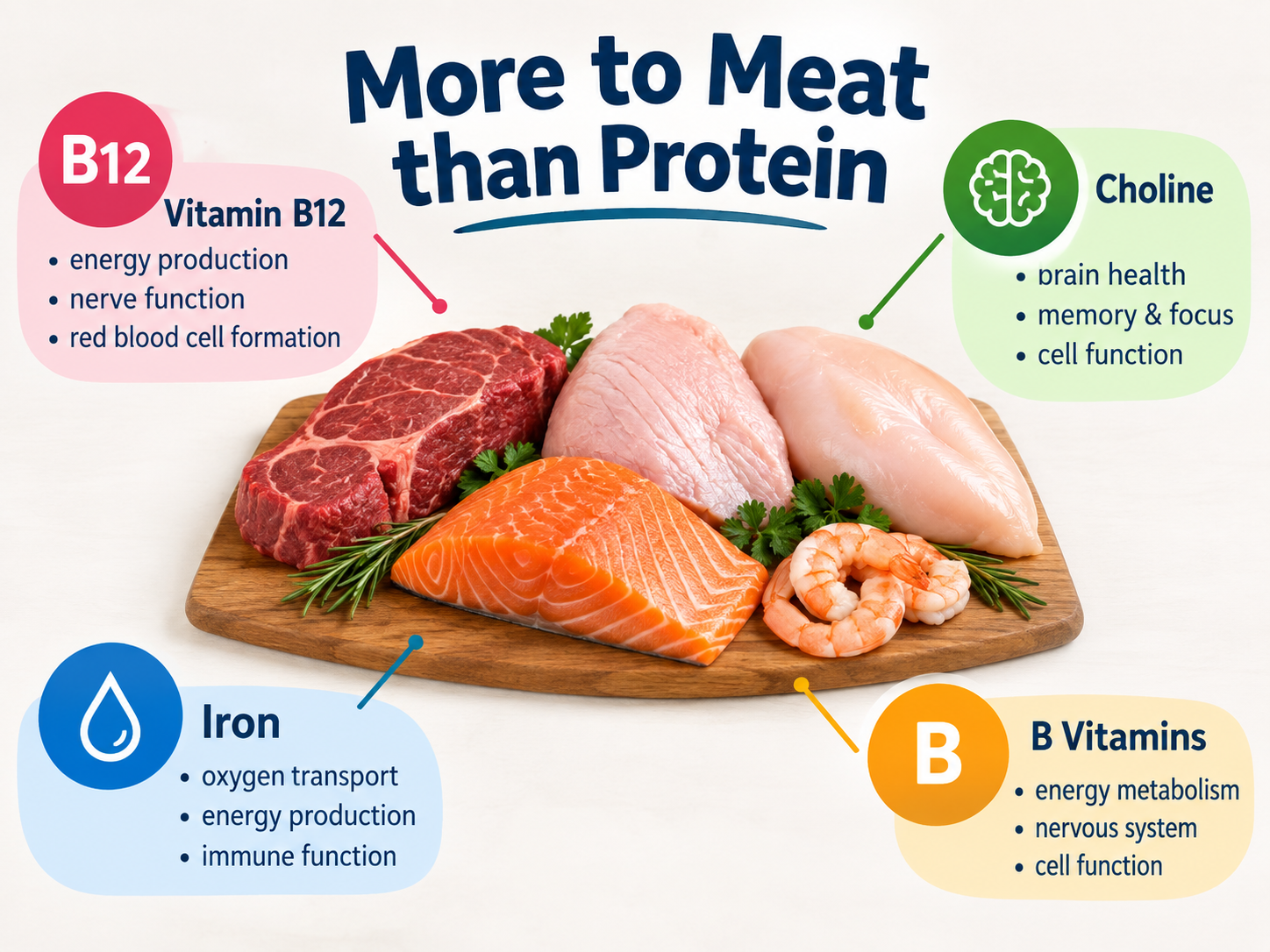
There's more to meat than protein. Meat is predominantly thought of as a protein source, but what else does it have?
Table of Contents
Benefits of Protein
Firstly though, what are some benefits of protein? Protein contains essential amino acids, which are necessary to consume for your body to function properly. It's also more satiating than carbs or fat. It helps muscle maintenance and growth. Protein has so many more other benefits, and you should be aiming for it first and foremost on your plate.
Vitamin B12
Firstly, let's tackle vitamin B12. Vitamin B12 is basically the opposite of vitamin C. While vitamin C is basically only in plant-based foods and is mostly missing in animal-based foods, vitamin B12 is generally only in animal-based foods, being absent from most plant-based foods.
This is one reason why eating a variety of foods can be beneficial. Vegan diets require a reliable source of vitamin B12, while diets that exclude plant foods can make it more difficult to obtain enough vitamin C and certain other nutrients.
So what is vitamin B12? Also known as Cobalamin, vitamin B12 is a water-soluble, essential B vitamin that is abundant in meat and other animal based foods. These include egg yolks, fish and seafood, and Greek yogurt and cottage cheese.
B12 is important for energy production. Your body has stores of B12 that deplete over time, and they fill back up when you eat B12 rich foods or take a supplement. Vegans may feel great for a year or 2 as their body burns through its remaining stored B12, and then they start feeling sluggish and fatigued.
For an in-depth breakdown into Vitamin B12, with its benefits, symptoms of low intake, and sources, check out my article: B-Ware the Deficiency.
Choline
Do you know what choline is? I'm betting you don't. Choline is neither a vitamin nor mineral, but it's closest to a B vitamin, as it used to be classified as Vitamin B4.
Whatever it's called, choline is an essential nutrient that's abundant in meat, as well as other high-protein, animal-sourced foods, such as eggs, fish, and Greek yogurt.
Choline has important roles in neurotransmitter production, cell membranes, lipid transport/metabolism, and other physiological processes. For an in-depth break down into choline, with it's benefits, symptoms of low intake, and sources, check out my article: Choline - The Nutrient You've Never Heard Of.
Iron
Finally, let's talk about iron. While spinach is likely the most famous source of iron (thanks Popeye) meat is one of the better sources.
Meat and other animal based foods contain what's known as heme iron. On the other hand, non-heme iron is what's found in plant based foods like spinach and nuts.
Heme iron has a much higher bioavailability than non-heme iron. That means that much more iron from meat is absorbed by the body as compared to the same amount of iron from spinach.
The absorption rates of heme versus non-heme iron are approximately 15-35% and 2-20%, respectively. This means that heme iron is generally absorbed much more efficiently than non-heme iron, although the exact difference varies depending on your iron status and what other foods you eat. Roughly, for every 1 mg of iron from meat, you need to eat roughly 2.3 mg of iron from spinach.
For an in-depth breakdown into iron, with it's benefits, symptoms of low intake, and sources, check out my article: I Run on Iron.
Other Benefits of Meat
Outside of the main 3 above, there's also plenty of other benefits from meat. Namely, meat tends to be high in B vitamins. We already covered B12, but what about the rest?
- Vitamin B1 (Thiamin): energy metabolism and nervous-system function
- Vitamin B2 (Riboflavin): energy metabolism and antioxidant-related enzymes
- Vitamin B3 (Niacin): energy metabolism and DNA/cell function
- Vitamin B5 (Pantothenic acid): coenzyme A and energy/fat metabolism
- Vitamin B6 (Pyridoxine): amino-acid metabolism, neurotransmitters, red blood cells
- Vitamin B9 (Folate): DNA synthesis, cell division, and red blood cells
Conclusion
There's more to meat than just protein. Vitamin B12, choline, and iron are among the most notable, but all the B vitamins are essential and abundant in different types of meat.
For a more in-depth analysis into meat, seafood, and dairy, make sure to check out Let's Meet the Meats, I'm Hooked on Fish, and Got Dairy? Or for a deeper dive into protein and certain essential nutrients, check out Protein: The Essential Building Blocks and The ABCs of Nutrition.
But not only is there more to meat than protein, but there's also more to protein than meat. Check out the sister article, There's More to Protein than Meat.
This post may contain affiliate links