
Introduction
I've been wanting to experiment with making healthy versions of classic desserts by swapping out unhealthy ingredients for healthier alternatives, analyzing the results, and refining the recipe to end up with a healthier dessert that's as similar as possible to the original product. Today, I'll be tackling both brownies and cookies.
Table of Contents
The Problem
Obviously, there's nothing wrong with having a treat like a brownie or a cookie every now and then. Occasionally at a holiday or gathering, one brownie or cookie certainly will not kill you. But if you're someone who has them all the time, then learning to make healthier swaps with minimal difference can be a gamechanger.
For the purposes of this experiment, I will be modifying both my Classic Fudgy Brownies and Classic Chocolate Chip Cookies recipes. The way I see it, there are 3 health problems with traditional brownies and classic cookies, and most desserts for that matter. These are the following:
Brownies
Control
For reference, below are the ingredients and nutrition facts for my Classic Fudgy Brownies. This is my standard brownie recipe that I make from time to time:
- 1/2 cup, melted (112 g) Unsalted butter
- 1 tbsp (14 g) Extra virgin coconut oil
- 2 cup (240 g) Powdered sugar
- 2 large (101 g) Egg
- 1 tsp (5 g) Vanilla extract
- 1/4 tsp (1.5 g) Salt
- 1/2 cup + 1 tbsp (45 g) Cocoa powder
- 1/2 cup (60 g) All purpose flour
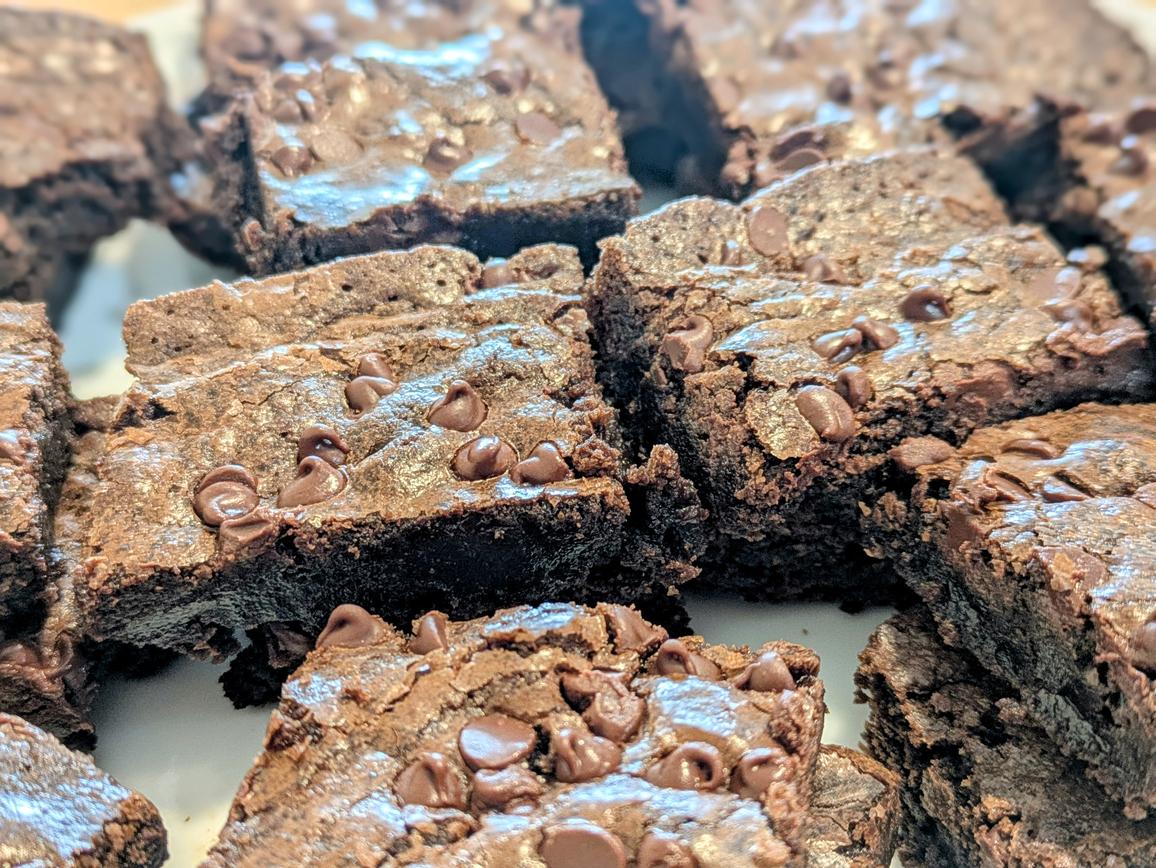
These brownies are delicious, don't get me wrong. But with 147 calories, 15 g of added sugar, and 8 g of fat for a fairly small brownie, these can't be more than a once a holiday treat for me. How can we bump up these numbers (or more accurately, bump them down)?
------------------------------------------
Total Fat: 7.6g (10%
10 % of Daily Value (78 g)
)
Sodium: 46mg (2%
2 % of Daily Value (2300 mg)
)
Total Carbohydrate: 19.6g (7%
7 % of Daily Value (275 g)
)
Fiber: 1.2g (4%
4 % of Daily Value (28 g)
)
Net Carbs: 18.4g
Total Sugar: 14.8g
Added Sugar: 14.8g (30%30% of Daily Value for added sugar (50 g))
Protein: 1.8g (4%
4 % of Daily Value (50 g)
)
Experiment
To make these brownies healthier, I have made the following 4 ingredient changes from the original recipe:
- Replaced sugar with granulated monk fruit
- Replaced melted unsalted butter with melted coconut oil
- Replaced white flour with almond flour
- Increased the salt from 1/4 tsp (1.5 g) to 1/2 tsp (3 g)
- 9 tbsp (126 g) Extra virgin coconut oil
- 1 1/4 cup (250 g) Granulated monk fruit
- 2 large (100 g) Egg
- 1 tsp (5 g) Vanilla extract
- 1/2 tsp (3 g) Salt
- 9 tbsp (45 g) Cocoa powder
- 1/2 cup (56 g) Almond flour
------------------------------------------
Total Fat: 10.7g (14%
14 % of Daily Value (78 g)
)
Sodium: 80mg (3%
3 % of Daily Value (2300 mg)
)
Total Carbohydrate: 18.0g (7%
7 % of Daily Value (275 g)
)
Fiber: 1.4g (5%
5 % of Daily Value (28 g)
)
Net Carbs: 1.0g
Total Sugar: 0.3g
Sugar Alcohol: 15.6g
Protein: 2.1g (4%
4 % of Daily Value (50 g)
)
I followed all the exact steps of my Classic Fudgy Brownies, but here's the quick rundown:
- Line a 9" square baking pan with parchment paper, and lightly grease it
- Melt coconut oil in a large glass bowl. Add in the rest of the ingredients, and beat until smooth
- Transfer the batter to the pan. Chill for 4+ hours
- After the chill, preheat oven to 350F. Leave the brownies on the counter as the oven heats up
- Bake at 350F for ~30 minutes, or until a toothpick comes out with minimal crumbs, the top is just set, and the center no longer jiggles
- Cool totally before slicing
Results
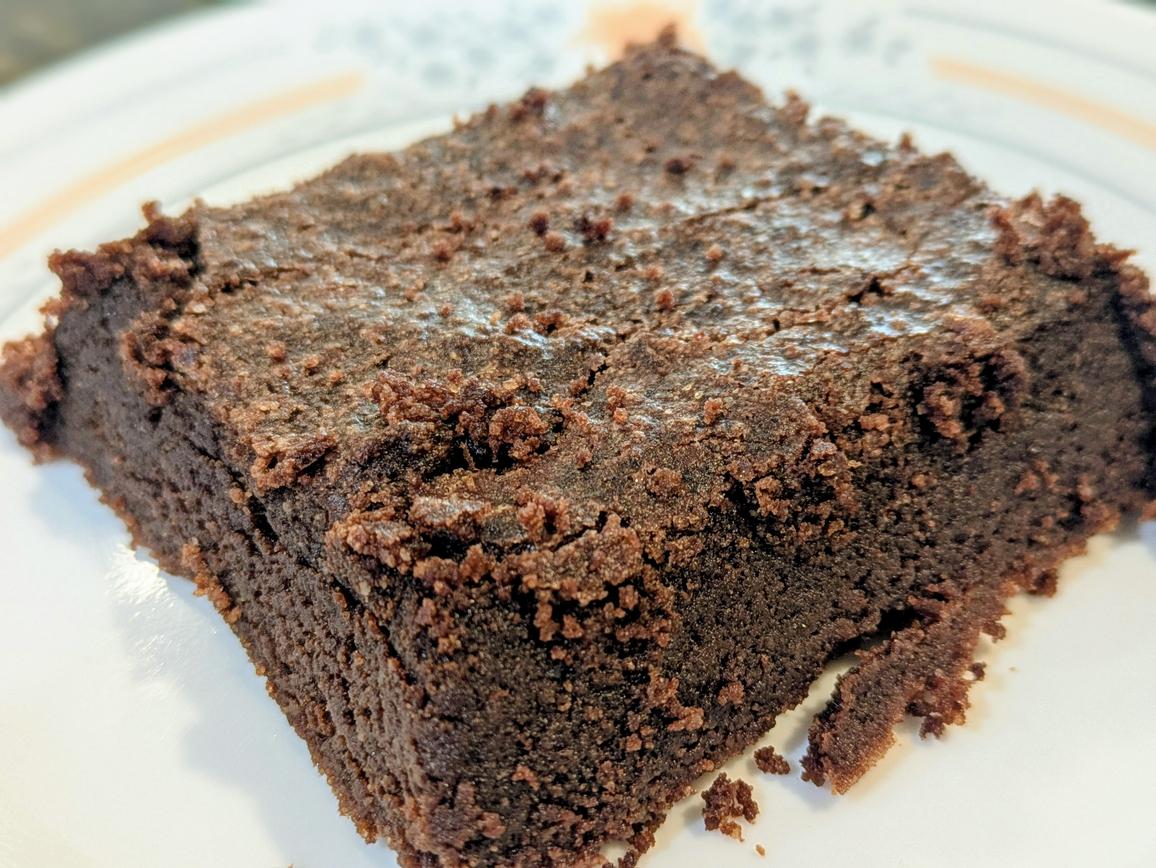
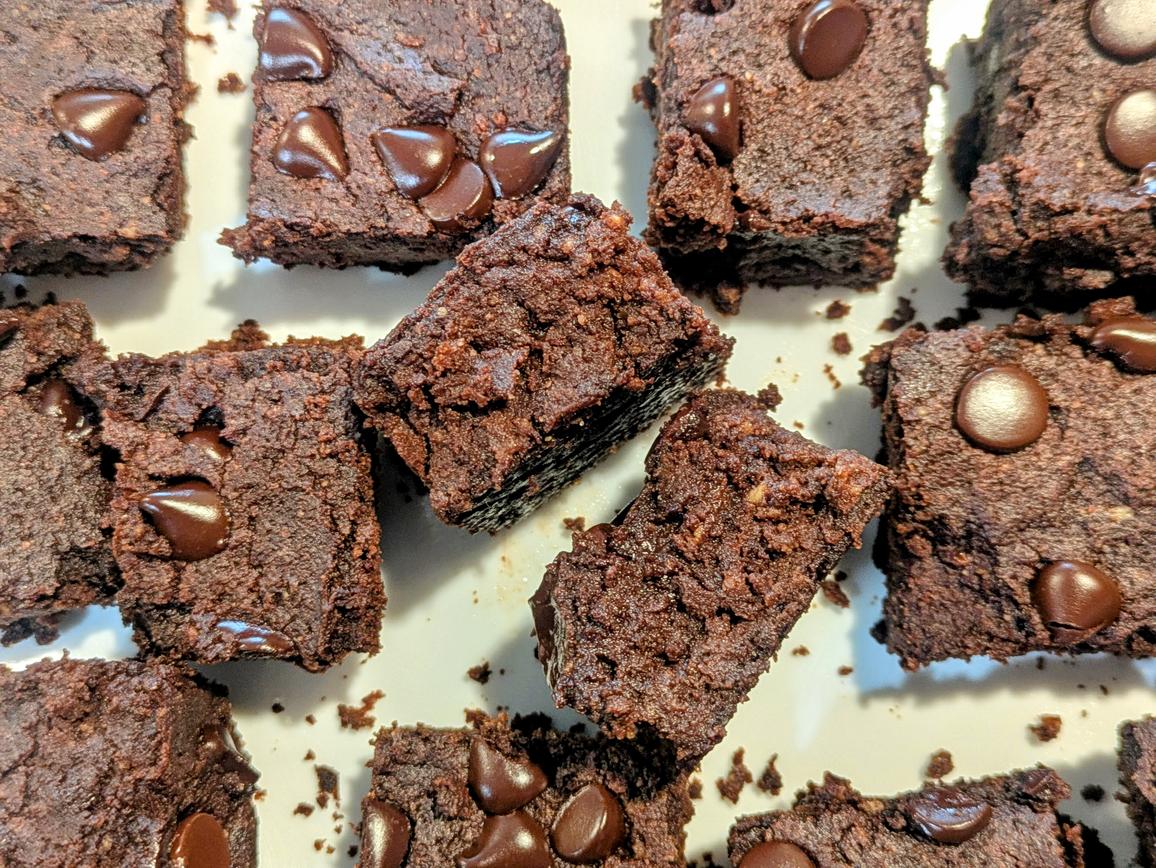
The result is (drumroll please.....) nearly identical. The brownies are slightly gritty; I guess the granulated monk fruit doesn't dissolve while baking as much as sugar does. There is also a slight sugar alcohol cooling aftertaste effect going on with these, as well as being slightly less sweet overall.
Besides that though, these brownies are identical in taste and texture. They're chewy and fudgy in the center, with perfectly crispy edges. All that coconut oil means that the brownies are super rich like you'd expect them to be, and they hold their shape enough to be picked up and eaten with your hands.
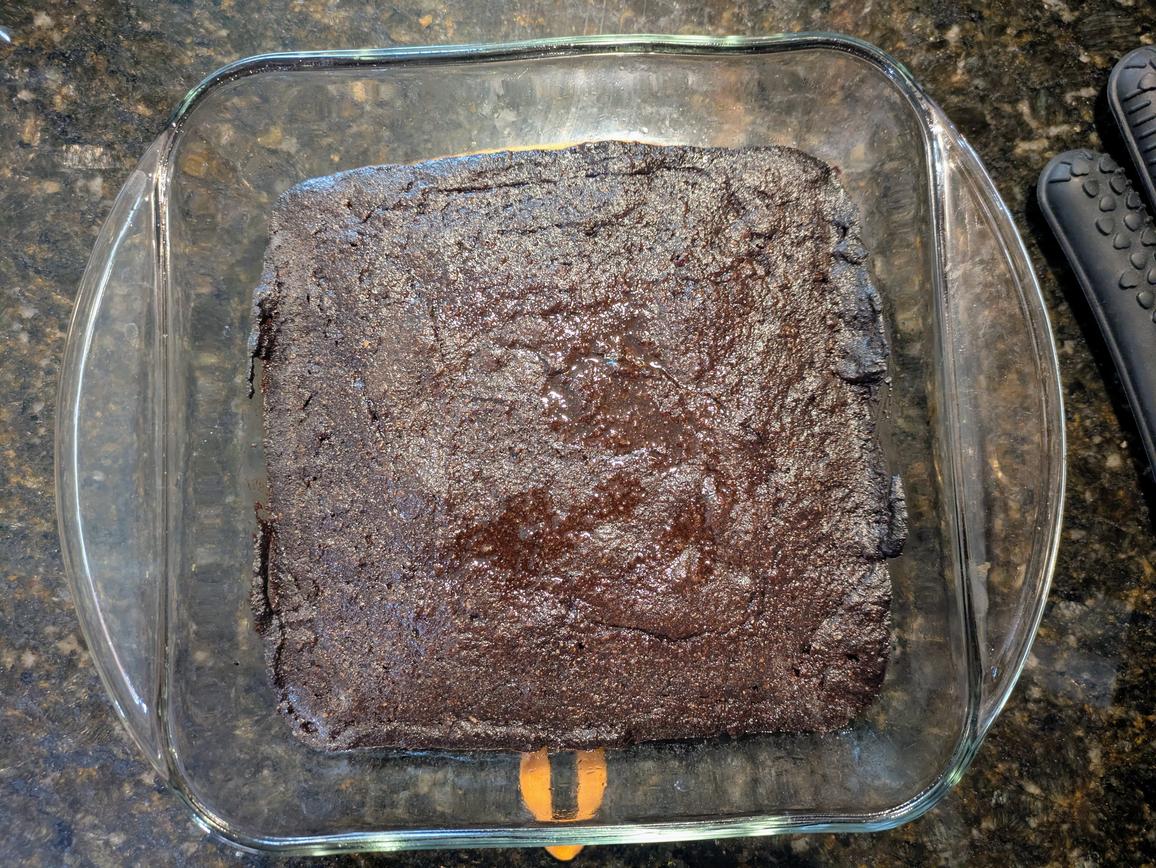
USE PARCHMENT PAPER! I absolutely cannot stress this enough. USE PARCHMENT PAPER! This is a mistake I make, assuming that all the fat in the batter should lubricate the pan enough for the brownies to come out easily. I mean, I don't use parchment paper with standard brownies, so I figured I didn't need it here.
Oh boy, was I wrong. The edges stuck so incredibly bad that half the brownies fell apart while trying to remove them from the pan and slice them. I got a clean cut from the center here, but I will certainly be baking with parchment paper next time.
Analysis
I see no reason why these brownies can't become my or your daily driver brownie recipe (okay, maybe not daily lol). The process and result of making these are nearly identical to standard brownies, just with healthier swaps.
Looking back at many of my healthy brownies recipes, the best ones by far are my Flourless Keto Brownies. And while those are fantastic, I do recognize that less people would be willing to check them out because of the cottage cheese and almond butter.
But with this recipe, it's identical to making standard brownies, which we're already familiar with.
Nutritional Comparison
| Nutrient | Control | Experiment |
|---|---|---|
| Calories | 147 | 107 |
| Protein | 1.8 g | 2.1 g |
| Fat | 7.6 g | 10.7 g |
| Fiber | 1.2 g | 1.4 g |
| Net Carbs | 18.4 g | 1.0 g |
| Added Sugar | 14.8 g | 0.0 g |
| Sugar Alcohol | 0.0 g | 15.6 g |
| Glycemic Index |
65 | 2 |
Cookies
Control
For reference, below are the ingredients and nutrition facts for my Classic Chocolate Chip Cookies. This is my standard cookie recipe that I make from time to time:
- 1 cup (200 g) Granulated sugar
- 1 tbsp (20 g) Molasses
- 1/2 cup, softened (112 g) Unsalted butter
- 1 large (50 g) Egg
- 2 tsp (10 g) Vanilla extract
- 1/2 tsp (3 g) Baking soda
- 1/2 tsp (3 g) Salt
- 2 cup (240 g) All purpose flour
- 1 cup (180 g) Semisweet chocolate chips
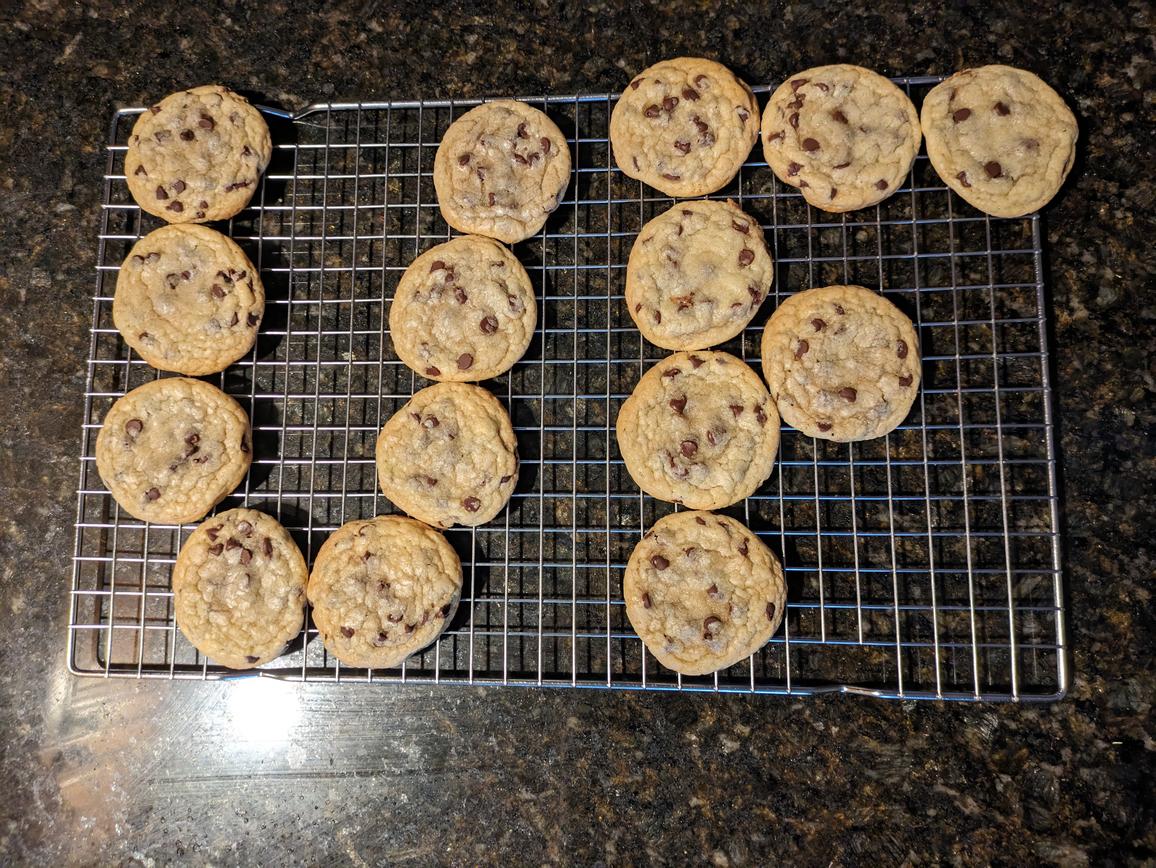
These cookies are delicious, don't get me wrong. But with 113 calories, 10 g of added sugar, and 5 g of fat for a fairly small cookie, these can't be more than a once a holiday treat for me. How can we bump up these numbers (or more accurately, bump them down)?
------------------------------------------
Total Fat: 4.9g (6%
6 % of Daily Value (78 g)
)
Sodium: 60mg (3%
3 % of Daily Value (2300 mg)
)
Total Carbohydrate: 15.9g (6%
6 % of Daily Value (275 g)
)
Fiber: 0.6g (2%
2 % of Daily Value (28 g)
)
Net Carbs: 15.3g
Total Sugar: 9.5g
Added Sugar: 9.5g (19%19% of Daily Value for added sugar (50 g))
Protein: 1.3g (3%
3 % of Daily Value (50 g)
)
Experiment
To make these cookies healthier, I have made the following 4 ingredient changes from the original recipe:
- Replaced sugar with granulated monk fruit
- Replaced melted unsalted butter with melted coconut oil
- Replaced white flour with a mix of almond flour and cornstarch
- Replaced standard chocolate chips with sugar free chocolate chips
- 1/2 cup (112 g) Extra virgin coconut oil
- 1 cup (200 g) Granulated monk fruit
- 1 large (50 g) Egg
- 2 tsp (10 g) Vanilla extract
- 1/2 tsp (3 g) Baking soda
- 1/2 tsp (3 g) Salt
- 1/4 cup (30 g) Cornstarch
- 1 1/2 cup (168 g) Almond flour
- 1 cup (180 g) Sugar free chocolate chips
------------------------------------------
Total Fat: 8.1g (10%
10 % of Daily Value (78 g)
)
Sodium: 63mg (3%
3 % of Daily Value (2300 mg)
)
Total Carbohydrate: 11.4g (4%
4 % of Daily Value (275 g)
)
Fiber: 2.3g (8%
8 % of Daily Value (28 g)
)
Net Carbs: 1.7g
Total Sugar: 0.5g
Sugar Alcohol: 7.4g
Protein: 1.6g (3%
3 % of Daily Value (50 g)
)
I followed all the exact steps of my Classic Chocolate Chip Cookies, but here's the quick rundown:
- Line 2 large cookie sheets with parchment paper
- Melt coconut oil in a large glass bowl. Beat in the granulated monk fruit, egg, vanilla, baking soda, and salt until smooth. Mix in the cornstarch and almond flour with a silicone spatula. Fold in the chocolate chips
- Chill the dough for 30+ minutes in the bowl
- After the chill, preheat oven to 350F
- Scoop the cookies into 1.5 tbsp sized balls, about 22 grams each. Add to the cookie sheet, and press them down to a 1/2" thick circle
- Bake at 350F for ~10 minutes, or until the edges and bottoms are lightly browned. Let cool on the sheet for 5 minutes before transferring to a wire rack
Results
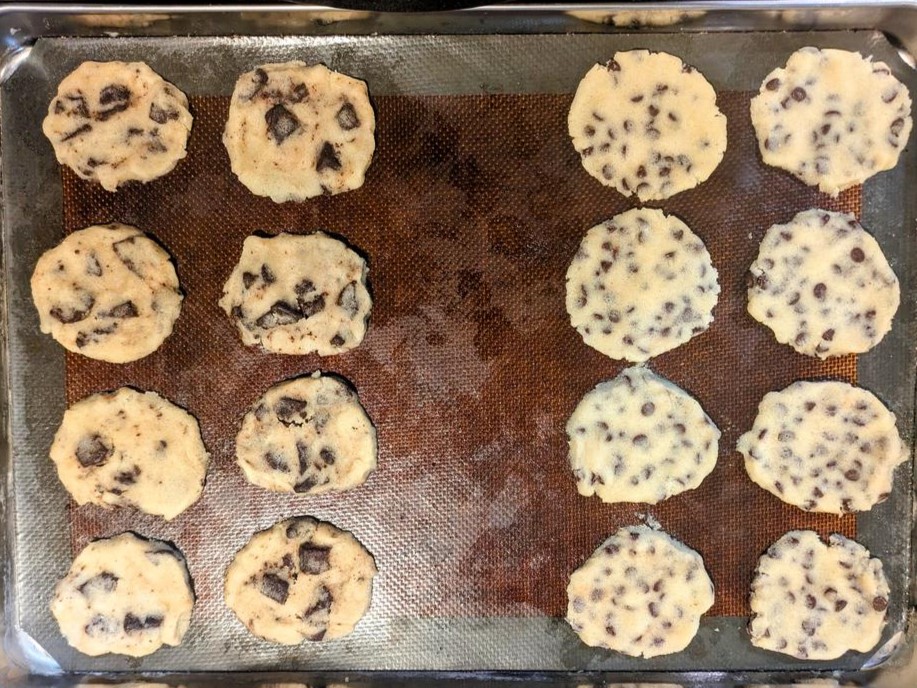
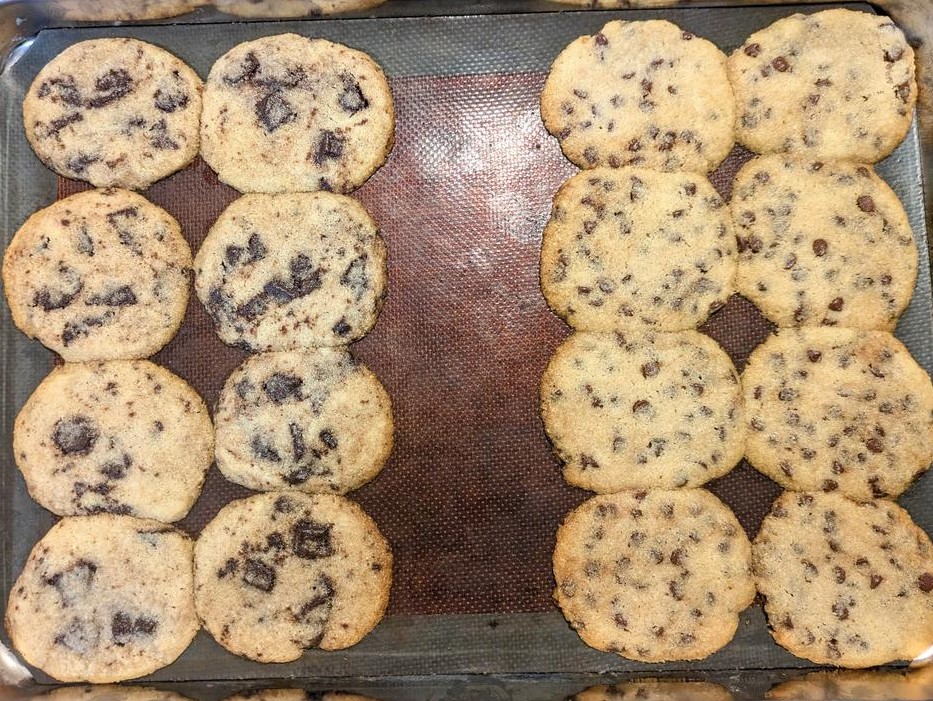
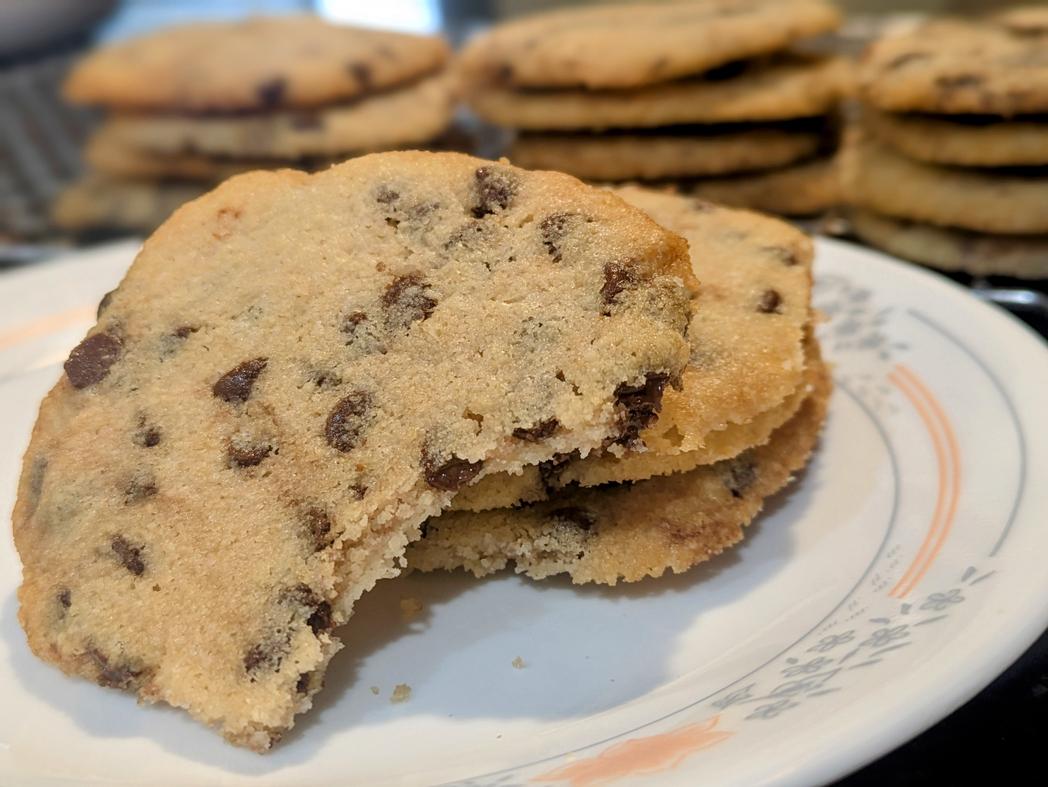
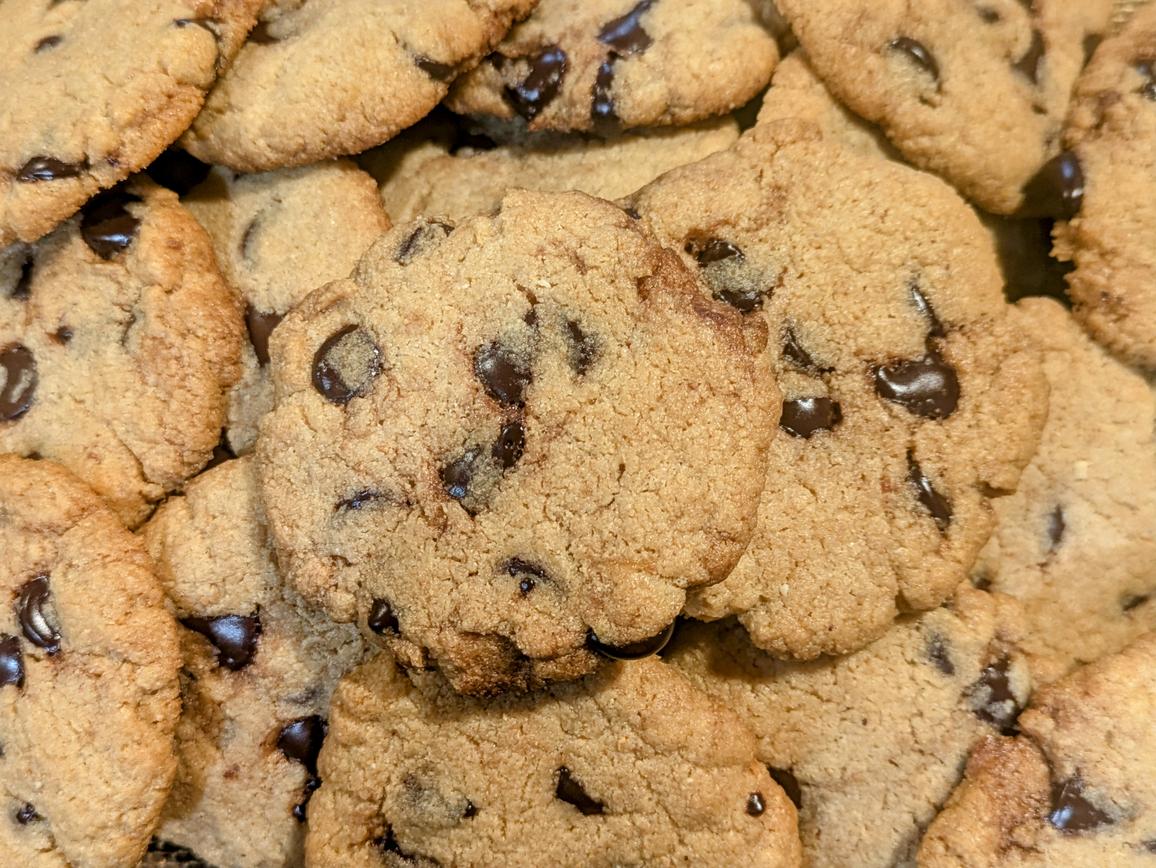
The result is (drumroll please.....) fine. First of all, I expected these cookies to not spread at all due to the lack of sugar. So I pressed them down as wide and flat as I'd want them to be. While there's no sugar, the cookies still spread a decent bit, likely because of the coconut oil. So they did run into each other a little bit.
There is also a slight sugar alcohol cooling aftertaste effect going on with these, as well as being less sweet overall.
The cookies themselves held their shapes decently, definitely not falling apart in your hand, but they're quite crumbly. More like the texture of a Tate's cookie than a typical homemade cookie. Some people prefer those crunchy cookies, but I like mine softer personally.
I also did a mix of sugar free chocolate chips in half of the dough, and homemade Monk Fruit Chocolate Chunks in the other half. The chocolate chips definitely gave it more of a standard cookie feel when baked, but they were pretty similar when raw.
Analysis
Overall though, these cookies somewhat lacked that buttery and chewy goodness characteristic of a standard chocolate chip cookie. They're still pretty good though. But while the experimental brownies were nearly identical to the control group, these experimental cookies just feel like a gluten free cookie.
Which makes sense; cookies use much more flour than brownies, so they're harder to make gluten free. At least they don't taste "healthy", but people will know that there's something up with these. Sorry.
The upside of this experiment is that the process and result of making these are nearly identical to standard cookies, just with healthier swaps. While I prefer to make my own homemade sugar free chocolate, most other people would opt for using a bag of sugar free chocolate chips, which works all the same.
Taking a look back at many of my healthy cookie recipes, the best ones by far are my Keto Chocolate Chip Cookies. And while those are fantastic, I do recognize that less people would be willing to check them out because of the cashew butter.
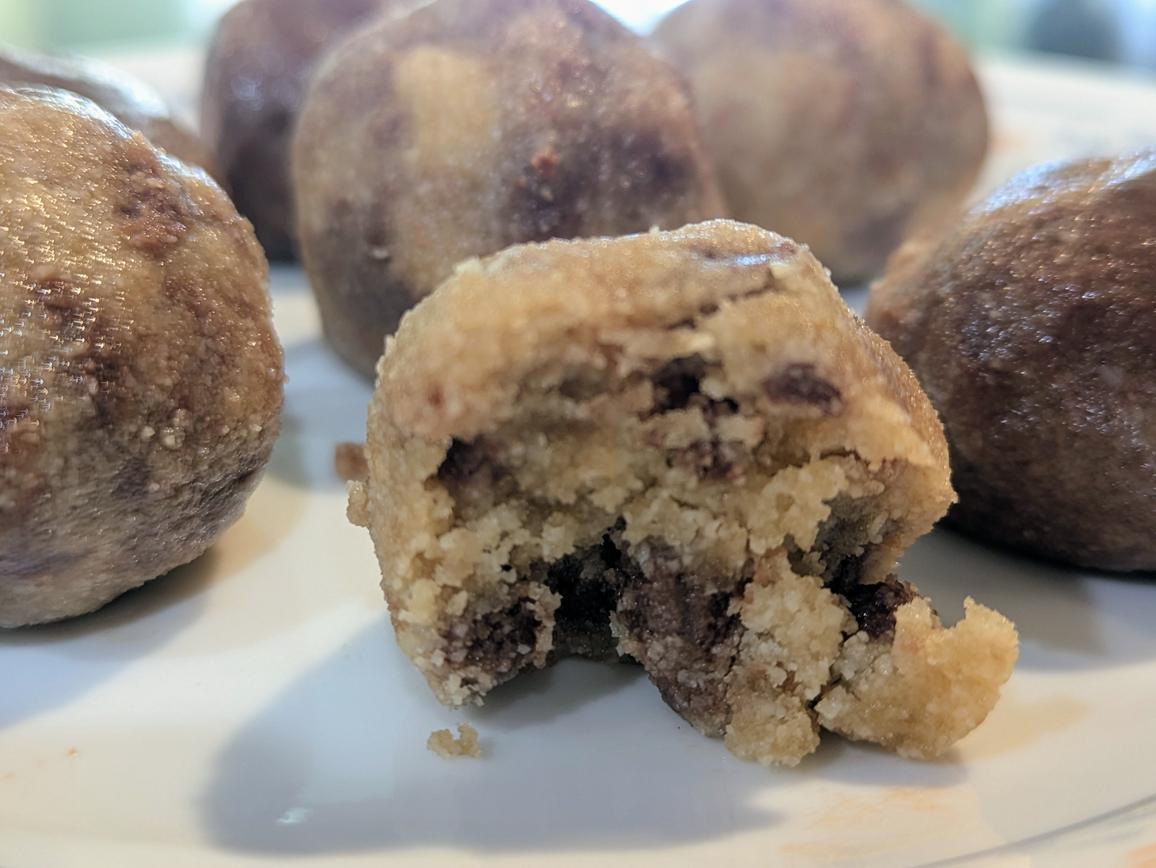
While the actual baked cookies were just kinda okay, the raw cookie dough was great. Just like the baked brownies, the raw cookie dough was probably about 90% as good as a standard raw cookie dough in terms of taste and texture. If you're a fan of edible cookie dough, I'd totally recommend making this recipe, and just swap the egg for any kind of milk (3 tbsp, 45 g).
Nutritional Comparison
| Nutrient | Control | Experiment |
|---|---|---|
| Calories | 113 | 93 |
| Protein | 1.3 g | 1.6 g |
| Fat | 4.9 g | 8.1 g |
| Fiber | 0.6 g | 2.3 g |
| Net Carbs | 15.3 g | 1.7 g |
| Added Sugar | 9.5 g | 0.0 g |
| Sugar Alcohol | 0.0 g | 7.4 g |
| Glycemic Index |
65 | 13 |
Conclusion
In conclusion, I've proved that you can both have your cake and eat it too (or in this case, have your brownies). At least when it comes to the brownies, you can simply swap white sugar, butter, and white flour for granulated monk fruit, coconut oil, and almond flour, and end up with a significantly healthier brownie that's 90% as good.
On the other hand, the same does not quite hold true for cookies. These had quite a bit of a different texture and taste, but still resulted in a passable cookie. I'd recommend giving it a try just to experience the difference for yourself.
It is true that neither of the experimental recipes are low calorie due to all the fat from the coconut oil and almond flour. However, both recipes are sugar free, gluten free, and free of refined flours. They're also higher in healthy fats, fiber, protein, and vitamins and minerals.
And most importantly, the brownies feel as close as you can get to standard brownies as possible in terms of ingredients list, preparation, taste, and texture. I hope you give the brownie recipe in particular a go and let me know what you think!
The main difference is that both the cookies and the brownies have a mild cooling effect from the erythritol in the sweetener. Do you know what else has a cooling effect? That's right, mint. You can very easily "pass off" the cooling taste as mint by adding in 1/4 tsp (1.25 g) mint extract for a mint chocolate chip cookie or mint chocolate brownie.
As the baked brownies and raw cookie dough were quite successful, I've isolated those recipes and put them in their own posts if you'd like to try for yourselves. Please check out The Best Healthy Brownies Recipe and The Best Healthy Cookie Dough for full written versions!
Sources
This post may contain affiliate links