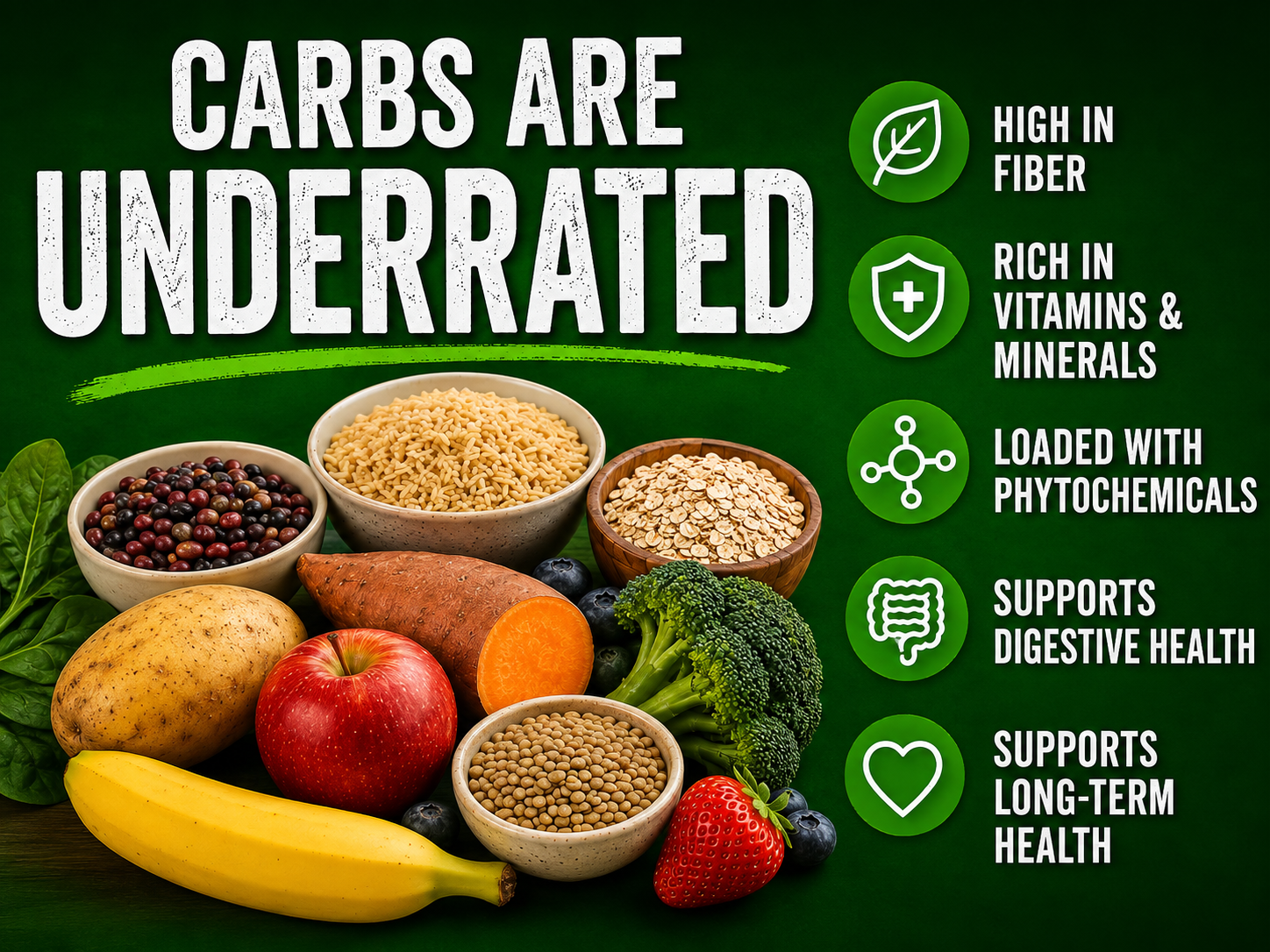
Carbs are underrated. Why do I say that? When carbohydrate rich foods are consumed, they're broken down into glucose, which is one of the body's primary and most readily available sources of energy.
If you've ever wondered why you feel fatigued, sluggish, or just plain miserable on a low carb or keto diet, this can be caused by a lack of carbohydrates. Your body can make glucose from other sources, but that doesn't necessarily mean it's the best or easiest option for every situation.
Carbohydrates are particularly useful for fueling exercise, replenishing muscle glycogen, supporting recovery, and helping you feel satisfied after a meal. This is especially important if you're physically active.
Your muscles store carbohydrates as glycogen, which can be rapidly accessed during exercise. The harder and more intense the activity, the more useful that readily available fuel becomes. That's one reason carbohydrates have long been a staple of athletic nutrition.
It's true that there are a lot of crappy carb sources out there. These include things like white bread, white rice, many types of refined pasta, sugary cereals, pastries, candy, and other foods made primarily from refined flour or added sugar.
These foods are void of nutrition and less filling compared to their whole food counterparts. You don't need to completely fear them, but they shouldn't make up the majority of your carbohydrate intake.
But that does NOT mean you should eat a low carb diet. Many carbohydrate rich foods are packed with vitamins, minerals, fiber, and complex carbohydrates.
These foods aren't just sources of calories; they're sources of nutrition. Think potatoes, sweet potatoes, beans, lentils, brown rice, quinoa, barley, bulgur, oats, and whole grain breads and pastas.
And don't forget about fruits and vegetables! Many fruits and vegetables contain significant amounts of carbohydrates along with fiber, vitamins, minerals, antioxidants, and other beneficial compounds.
The important distinction isn't simply carbs vs. no carbs. It's which carbs you're eating. If it's a whole or minimally processed food, there's a good chance it deserves a place in your diet.
And you don't have to eat carbohydrates by themselves. Pairing them with protein, healthy fats, and fiber can make a meal more filling and nutritionally balanced.
Think potatoes with chicken and vegetables. Oatmeal with Greek yogurt and peanut butter. Rice and beans with avocado and vegetables.
In other words, don't be afraid of carbs. Build your diet around nutritious foods, and carbohydrates can absolutely be part of it.
But don't take that to mean you need carbohydrates. Your body can survive without them, but that doesn't mean you should avoid them. For the other side of the story, check out Carbs Are Overrated.
If you've ever wondered why you feel fatigued, sluggish, or just plain miserable on a low carb or keto diet, this can be caused by a lack of carbohydrates. Your body can make glucose from other sources, but that doesn't necessarily mean it's the best or easiest option for every situation.
Carbohydrates are particularly useful for fueling exercise, replenishing muscle glycogen, supporting recovery, and helping you feel satisfied after a meal. This is especially important if you're physically active.
Your muscles store carbohydrates as glycogen, which can be rapidly accessed during exercise. The harder and more intense the activity, the more useful that readily available fuel becomes. That's one reason carbohydrates have long been a staple of athletic nutrition.
It's true that there are a lot of crappy carb sources out there. These include things like white bread, white rice, many types of refined pasta, sugary cereals, pastries, candy, and other foods made primarily from refined flour or added sugar.
These foods are void of nutrition and less filling compared to their whole food counterparts. You don't need to completely fear them, but they shouldn't make up the majority of your carbohydrate intake.
But that does NOT mean you should eat a low carb diet. Many carbohydrate rich foods are packed with vitamins, minerals, fiber, and complex carbohydrates.
These foods aren't just sources of calories; they're sources of nutrition. Think potatoes, sweet potatoes, beans, lentils, brown rice, quinoa, barley, bulgur, oats, and whole grain breads and pastas.
And don't forget about fruits and vegetables! Many fruits and vegetables contain significant amounts of carbohydrates along with fiber, vitamins, minerals, antioxidants, and other beneficial compounds.
The important distinction isn't simply carbs vs. no carbs. It's which carbs you're eating. If it's a whole or minimally processed food, there's a good chance it deserves a place in your diet.
And you don't have to eat carbohydrates by themselves. Pairing them with protein, healthy fats, and fiber can make a meal more filling and nutritionally balanced.
Think potatoes with chicken and vegetables. Oatmeal with Greek yogurt and peanut butter. Rice and beans with avocado and vegetables.
In other words, don't be afraid of carbs. Build your diet around nutritious foods, and carbohydrates can absolutely be part of it.
But don't take that to mean you need carbohydrates. Your body can survive without them, but that doesn't mean you should avoid them. For the other side of the story, check out Carbs Are Overrated.
This post may contain affiliate links