I love beans. I eat them all the time, and you should too. They're extremely cheap and easy to prepare in addition to being nutritious.
Outside of the obvious fiber, beans are a good source of many micronutrients. These include vitamin B1, folate, copper, magnesium, manganese, potassium, and zinc.
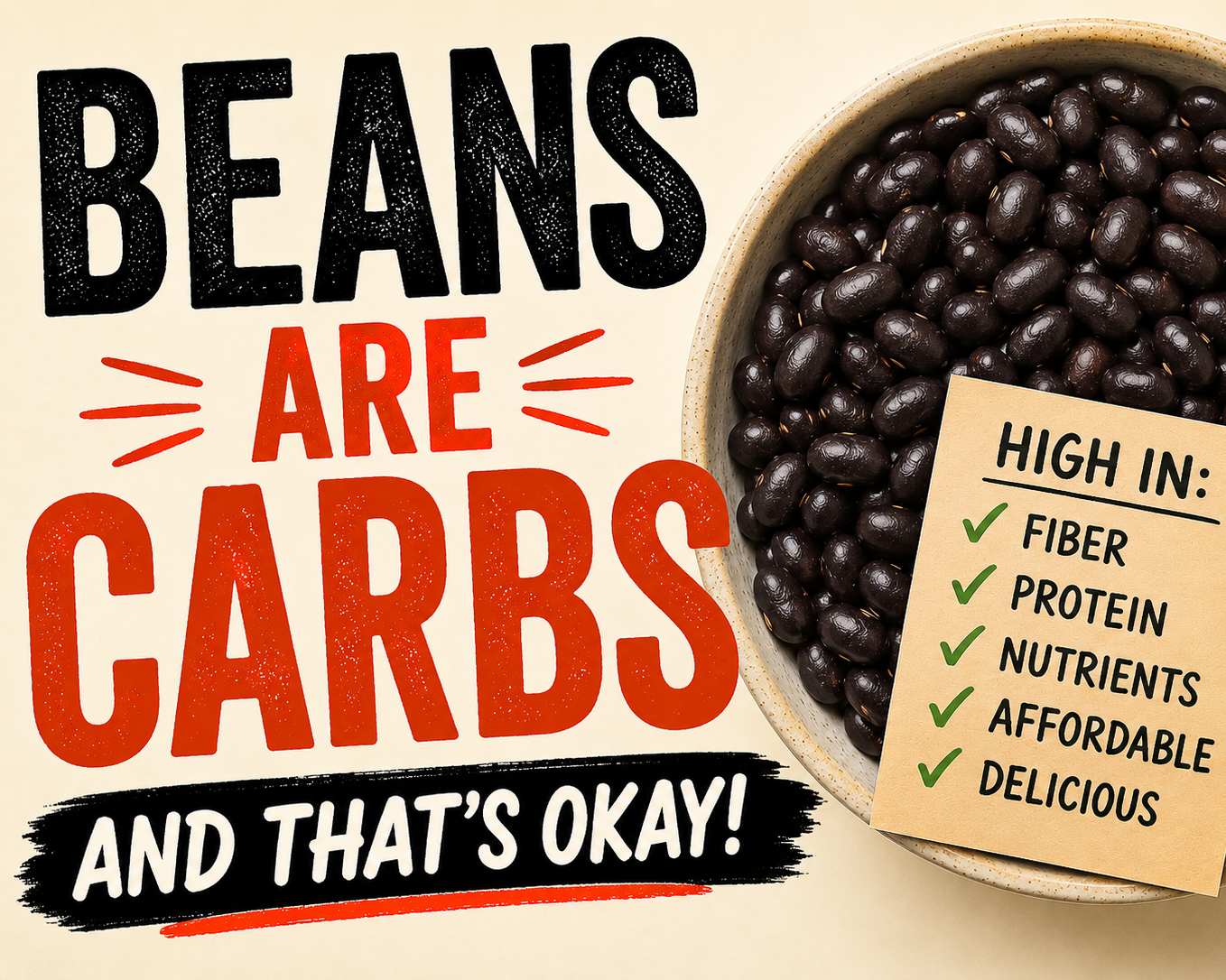
But beans are carbs. Beans are one of the highest protein carbohydrate based foods you can eat, but they're still primarily a carb source.
There's nothing wrong with carbs; far from it. But beans should not replace the chicken, turkey, beef, fish, or tofu on your plate. They should replace the rice, bread, or pasta.
Here is the nutritional information per 100 g of drained and rinsed black beans, or approximately 2/3 cup.
As you can see, black beans have 132 calories, with about 24 g of total carbs, 9 g of fiber, and 9 g of protein. Approximately 60% of the calories in black beans comes from carbs, while 35% comes from protein and 5% from fat.
The majority of the calories come from carbs; therefore beans are a carb. And that's okay!
35% of calories from protein is hardly something to scoff at; eating beans is one of the best ways to get additional protein into your diet. A little can go a long way, and beans should be a staple of your diet if you can tolerate them.
If you're prioritizing a high-protein diet, use beans to replace rice, bread, and pasta; not chicken, fish, tofu, or other protein-rich foods. Beans are one of the best upgrades you can make to the carbohydrate portion of your meal.
In comparison, here are some common foods with their macro-nutrients per 100 calories. Their respective protein ratios are also given, which is defined as the grams of protein divided by the number of calories. For a food to be considered "high protein", it should have a protein ratio of 0.1 or higher.
None of this means vegetarians can't get enough protein from beans. It just means beans function differently than foods like chicken breast or tofu, and you'll generally need larger portions or multiple protein sources to reach the same protein intake.
So eat your beans. Not because they're secretly meat. Not because they're a magical superfood. Not because carbohydrates are evil and beans somehow don't count.
Eat them because they're cheap, nutritious, filling, high in fiber, and surprisingly high in protein. Just remember what they are: a carbohydrate-rich food that happens to contain a lot of protein.
Because beans are carbs. And carbs are good.
Sources
Outside of the obvious fiber, beans are a good source of many micronutrients. These include vitamin B1, folate, copper, magnesium, manganese, potassium, and zinc.
But beans are carbs. Beans are one of the highest protein carbohydrate based foods you can eat, but they're still primarily a carb source.
There's nothing wrong with carbs; far from it. But beans should not replace the chicken, turkey, beef, fish, or tofu on your plate. They should replace the rice, bread, or pasta.
Here is the nutritional information per 100 g of drained and rinsed black beans, or approximately 2/3 cup.
As you can see, black beans have 132 calories, with about 24 g of total carbs, 9 g of fiber, and 9 g of protein. Approximately 60% of the calories in black beans comes from carbs, while 35% comes from protein and 5% from fat.
The majority of the calories come from carbs; therefore beans are a carb. And that's okay!
35% of calories from protein is hardly something to scoff at; eating beans is one of the best ways to get additional protein into your diet. A little can go a long way, and beans should be a staple of your diet if you can tolerate them.
If you're prioritizing a high-protein diet, use beans to replace rice, bread, and pasta; not chicken, fish, tofu, or other protein-rich foods. Beans are one of the best upgrades you can make to the carbohydrate portion of your meal.
In comparison, here are some common foods with their macro-nutrients per 100 calories. Their respective protein ratios are also given, which is defined as the grams of protein divided by the number of calories. For a food to be considered "high protein", it should have a protein ratio of 0.1 or higher.
| Nutrient | Black Beans Cooked 75.8 g |
White Rice Cooked 77.5 g |
White Pasta Cooked 63.3 g |
White Bread 37.5 g |
Chicken Breast Raw 83.3 g |
93% Turkey Raw 66.7 g |
93% Beef Raw 65.8 g |
Salmon Raw 70.4 g |
Tofu Raw 131.6 g |
|---|---|---|---|---|---|---|---|---|---|
| Calories | 100 | 100 | 100 | 100 | 100 | 100 | 100 | 100 | 100 |
| Protein | 6.7 g | 2.1 g | 3.7 g | 3.5 g | 18.8 g | 12.5 g | 13.7 g | 14.0 g | 10.6 g |
| Fat | 0.4 g | 0.2 g | 0.6 g | 1.3 g | 2.2 g | 5.6 g | 4.6 g | 4.5 g | 6.3 g |
| Net Carbs | 11.4 g | 21.4 g | 18.4 g | 17.5 g | 0.0 g | 0.0 g | 0.0 g | 0.0 g | 2.1 g |
| Fiber | 6.6 g | 0.3 g | 1.1 g | 0.9 g | 0.0 g | 0.0 g | 0.0 g | 0.0 g | 0.4 g |
| Protein Ratio | 0.067 | 0.021 | 0.037 | 0.035 | 0.188 | 0.125 | 0.137 | 0.140 | 0.106 |
None of this means vegetarians can't get enough protein from beans. It just means beans function differently than foods like chicken breast or tofu, and you'll generally need larger portions or multiple protein sources to reach the same protein intake.
So eat your beans. Not because they're secretly meat. Not because they're a magical superfood. Not because carbohydrates are evil and beans somehow don't count.
Eat them because they're cheap, nutritious, filling, high in fiber, and surprisingly high in protein. Just remember what they are: a carbohydrate-rich food that happens to contain a lot of protein.
Because beans are carbs. And carbs are good.
Sources
This post may contain affiliate links